
Indonesia has a strong connection to the coconut industry, thanks to its tropical climate, extensive coconut-growing areas, and established coconut-processing sector. For international buyers, this creates opportunities to source coconut-based ingredients for food manufacturing, personal care, and other industrial applications. However, finding the right Indonesia RBD coconut oil manufacturer involves more than comparing prices or choosing the first supplier that appears in a search.
RBD coconut oil stands for refined, bleached, and deodorized coconut oil. Manufacturers process the oil to reduce impurities, unwanted color, and strong odors, producing an ingredient with characteristics suitable for various applications. Even so, product specifications, processing controls, packaging, and consistency can vary between suppliers.
For importers, distributors, and food manufacturers, choosing a reliable partner requires a closer look at manufacturing capability, quality assurance, documentation, and export readiness. This guide explains what RBD coconut oil manufacturers do, how to evaluate Indonesian suppliers, and which questions to ask before placing an order.
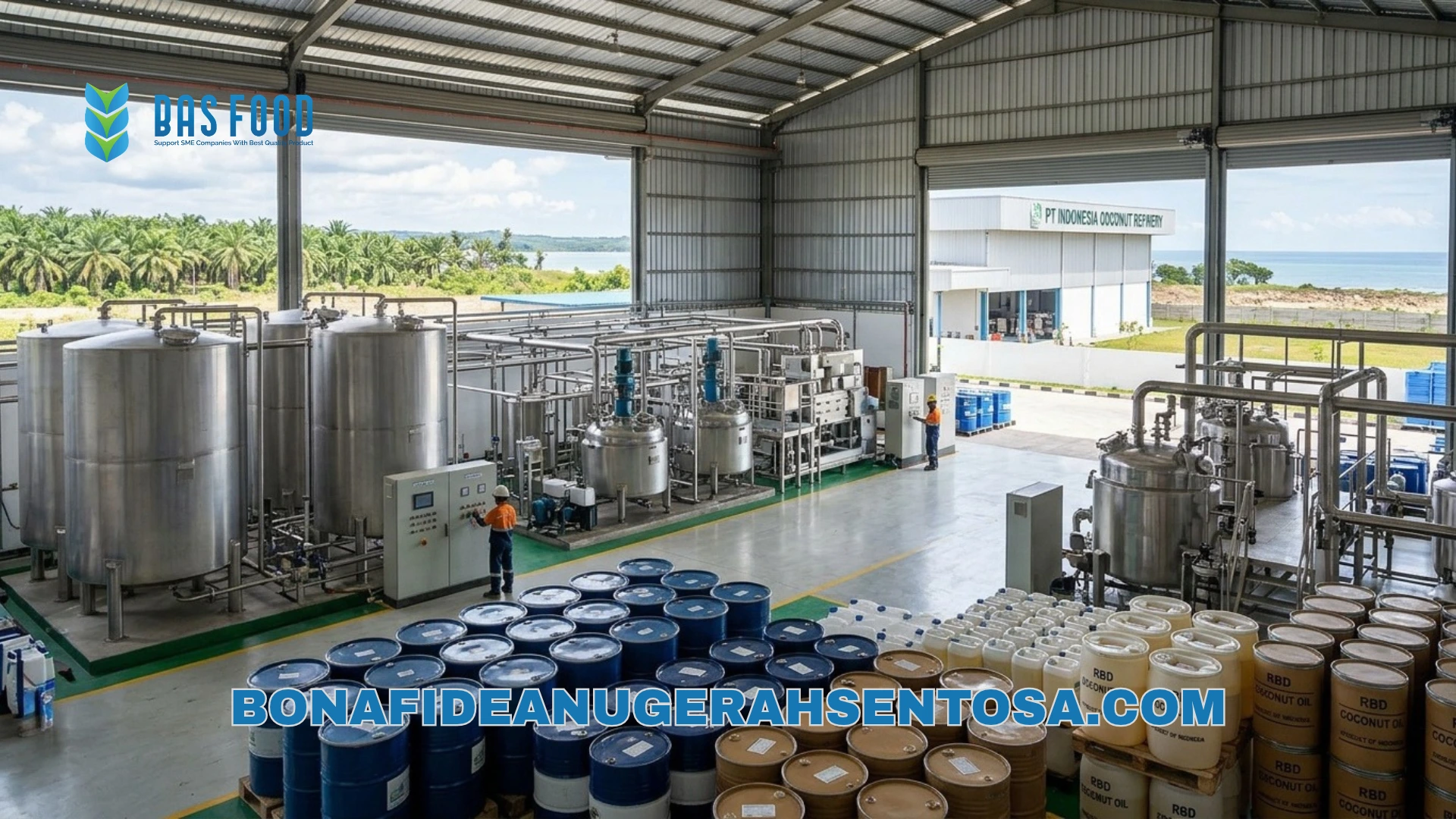
Why Source RBD Coconut Oil From Indonesia?
Indonesia is one of the world’s major coconut-producing countries. Its agricultural conditions support coconut cultivation across many regions, creating a foundation for businesses involved in coconut oil and other coconut-derived products. This established agricultural sector makes Indonesia a relevant sourcing destination for international buyers seeking coconut-based raw materials.
Nevertheless, a country’s coconut production does not automatically guarantee that every manufacturer can meet a buyer’s requirements. Importers should evaluate the individual company’s processing operations, sourcing arrangements, quality controls, and ability to supply the required product specification. A strong sourcing decision depends on verified supplier capabilities rather than country reputation alone.
RBD coconut oil serves a range of commercial applications. Food manufacturers may use it in selected bakery products, confectionery formulations, frying applications, and processed foods. Depending on the product grade and relevant specifications, coconut oil may also be used in certain personal care and industrial formulations.
Because these applications have different requirements, buyers should identify the intended use before contacting a manufacturer. An ingredient suitable for one production process may not meet the requirements of another. Clear specifications help both parties determine whether the product is an appropriate match.
Understanding What an RBD Coconut Oil Manufacturer Does
An RBD coconut oil manufacturer processes coconut oil through refining, bleaching, and deodorizing. Although the exact production system can vary, each stage serves a particular purpose in controlling the oil’s characteristics.
Refining helps reduce unwanted components and impurities. Bleaching uses appropriate processing methods and materials to reduce color compounds and other substances. Deodorizing generally uses controlled conditions, often involving steam under reduced pressure, to reduce unwanted odors and volatile compounds. Manufacturers must operate these stages according to the intended product specification and applicable requirements.
After processing, the oil may undergo checks for characteristics such as appearance, odor, moisture, free fatty acids, and other parameters specified by the buyer. The relevant tests depend on the product grade, intended application, and contractual requirements.
Packaging and storage also form part of the manufacturing and delivery process. A supplier must protect the finished oil from contamination and unsuitable handling conditions. Depending on the order, packaging may include drums, intermediate bulk containers, or approved bulk-liquid transport systems.
When evaluating an Indonesia RBD coconut oil manufacturer, buyers should clarify which activities the company performs directly. Some businesses operate their own processing facilities, while others source finished oil from partner factories or coordinate supply through third parties. Neither model should be judged by its label alone; the important question is whether the supplier can provide transparent information and meet the buyer’s requirements.
Manufacturing Capability: Look Beyond Production Claims
Manufacturing capability refers to a supplier’s ability to produce or arrange the required product consistently and reliably. It includes more than the size of a factory or the number of tonnes a company claims it can supply.
For example, buyers should ask whether the manufacturer controls the refining process, how it manages incoming raw materials, and whether it has procedures for monitoring production conditions. They should also understand how the company handles product specifications, batch identification, storage, and dispatch.
Production capacity is another important consideration. A buyer with recurring monthly orders needs confidence that the supplier can support the agreed schedule. However, capacity claims should be supported by practical information, such as available production arrangements, lead times, current commitments, and the supplier’s ability to accommodate order variations.
It is equally important to understand the supplier’s flexibility.
Before entering a long-term supply agreement, request written confirmation of product availability, expected lead times, order quantities, packaging options, and delivery responsibilities. A clear agreement helps prevent misunderstandings when demand increases or shipping schedules change.
Quality Assurance: How to Evaluate RBD Coconut Oil Quality
Quality assurance is one of the most important parts of selecting an RBD coconut oil supplier. Buyers need a product that matches the agreed specification, performs as expected in production, and arrives with appropriate documentation.
Start by requesting a product specification sheet. Depending on the intended use, relevant parameters may include free fatty acid content, moisture and volatile matter, insoluble impurities, color, odor, and fatty acid composition. Buyers should establish the required limits with the manufacturer instead of assuming that every RBD coconut oil product follows an identical specification.
A certificate of analysis (CoA) can help buyers review test results for a particular batch or shipment. Before relying on a CoA, check that it identifies the relevant product and batch, includes the agreed test parameters, and comes from a source acceptable under the purchasing agreement. If independent verification is important, the parties can agree on testing by a suitable third-party laboratory.
Quality assurance should also cover handling and traceability. Ask how the manufacturer identifies production lots, records quality checks, manages nonconforming products, and investigates complaints. These procedures help buyers understand how the supplier responds when results fall outside the agreed range.
Finally, remember that quality is application-specific. A food manufacturer may have different requirements from a buyer using coconut oil in a non-food formulation. The product grade, applicable regulations, and intended application should guide the final approval process.
Conducting a Supplier Audit Before You Buy
A supplier audit helps buyers evaluate whether a potential manufacturer has the processes, records, and controls needed to meet their requirements. It can be especially useful when establishing a new supplier relationship, entering a long-term contract, or purchasing a large volume.
An audit does not always require an immediate factory visit. Buyers can begin with a structured questionnaire and a document review, then decide whether a remote assessment or on-site visit is necessary. The depth of the audit should reflect the purchase value, product risk, regulatory requirements, and importance of supply continuity.
During a supplier audit, consider reviewing the following areas:
- Company identity and the role it plays in manufacturing or supply.
- Production process and control of incoming raw materials.
- Product specifications and batch testing procedures.
- Calibration and maintenance of relevant measuring equipment.
- Batch traceability and document control.
- Storage, packaging, and contamination-prevention procedures.
- Complaint handling and corrective actions.
- Export experience and shipment documentation.
- Applicable certifications and their validity, where claimed.
Buyers should verify certifications rather than relying on logos or informal statements. Check the issuing body, validity period, scope, and whether the certificate covers the relevant facility and product. Never assume that a manufacturer holds a particular certification unless it has been confirmed.
After the audit, document any gaps and agree on practical corrective actions. A supplier that responds clearly to questions and provides relevant evidence is easier to assess than one that offers broad assurances without supporting information.
Comparing Indonesian Manufacturers and Suppliers
Price is an important purchasing factor, but it should not be the only one. A lower quotation may exclude packaging, inland transport, export handling, testing, or other costs. Therefore, buyers should compare quotations on the same basis and calculate the expected total landed cost.
Product consistency deserves equal attention. If two suppliers quote different specifications, their prices may not represent equivalent products. Make sure that each quotation identifies the product, applicable quality limits, packaging, quantity, delivery terms, and required documentation.
Communication also matters. An effective supplier should answer technical questions clearly, explain limitations, and provide realistic delivery information. Delayed or unclear communication during the quotation stage may create larger challenges when a shipment is being prepared or a quality issue needs to be resolved.
For recurring orders, assess the supplier’s ability to support a stable relationship. Ask how it manages changes in raw material availability, production scheduling, and shipment planning. Discuss how the supplier will communicate any issue that could affect the agreed delivery date or specification.
A structured comparison can help organize the decision:
| Evaluation factor | What buyers should verify |
|---|---|
| Product quality | Written specification and relevant batch test results |
| Manufacturing capability | Production arrangements, availability, and lead times |
| Quality assurance | Testing procedures, traceability, and corrective actions |
| Supplier audit | Evidence supporting the company’s stated capabilities |
| Packaging | Suitable materials, capacity, and handling requirements |
| Export readiness | Documentation, shipment coordination, and agreed delivery terms |
| Commercial terms | Price basis, payment conditions, order quantity, and lead time |
| Communication | Clear answers, timely updates, and defined responsibilities |
This approach makes it easier to compare suppliers objectively and explain the final selection to procurement, technical, and management teams.
Packaging, Storage, and Export Logistics
RBD coconut oil packaging should match the shipment volume and the buyer’s receiving facilities. Drums can offer flexibility for smaller or divided orders, while IBC containers may suit buyers that need larger units and have suitable handling equipment. For compatible products and routes, approved flexitank systems may be an option for large bulk shipments.
Each packaging format has different requirements. Buyers should confirm product-contact suitability, packaging specifications, closures, net fill, loading procedures, and carrier acceptance where relevant. For bulk-liquid systems, the importer must also have a suitable unloading arrangement at the destination.
Temperature deserves particular attention because coconut oil can become cloudy or solidify under cooler conditions. This physical change does not automatically indicate a defect, but it can affect pumping and unloading. The exporter, carrier, and importer should agree on suitable storage and handling procedures based on the product and route.
For international orders, buyers should also confirm the responsibilities of each party. Clarify who arranges packaging, transport, cargo insurance where applicable, export documents, and destination handling. The agreed Incoterm and sales contract should define the respective obligations.
Finally, check that the shipment documents are consistent. The commercial invoice, packing list, transport documents, product specification, and any required certificates should reflect the actual goods and shipment. Requirements vary by destination, so buyers should confirm them with their freight forwarder, customs broker, and relevant authorities before dispatch.
Working With CV Bonafide Anugerah Sentosa
When evaluating an Indonesian supplier, buyers should look for clear communication, transparent product information, and a practical understanding of export requirements. These qualities help bridge the gap between the manufacturer’s production process and the importer’s actual needs.
CV Bonafide Anugerah Sentosa can be considered as part of a sourcing evaluation for Indonesian coconut-based ingredients. Buyers interested in RBD coconut oil should contact the company directly to confirm current product availability, whether the oil is manufactured directly or sourced through partners, available specifications, packaging options, order quantities, and export terms.
It is important to verify the details that matter to your business rather than assume that every supplier offers the same products or capabilities. Ask for the relevant specification sheet, batch testing information, and documentation needed for your application. If a supplier audit is required by your procurement policy, discuss the available audit process and supporting records before final approval.
Businesses sourcing several coconut-derived ingredients may also search for a coconut sugar exporter supplier or a coconut sugar supplier. However, coconut sugar and RBD coconut oil are different products with separate processing methods, quality parameters, and specifications. Buyers should evaluate each product independently and confirm its availability rather than treating one supplier category as proof that every coconut-derived ingredient is offered.
A good sourcing relationship begins with clear expectations. When both parties understand the required quality, order schedule, packaging, documentation, and commercial terms, they can make better decisions and build a more reliable procurement process.
Building a Long-Term Supplier Relationship
Finding a suitable manufacturer is only the beginning. Long-term success depends on monitoring supplier performance after the first order. Buyers should track whether shipments arrive on schedule, product results meet the agreed specification, documents are accurate, and communication remains effective.
A simple supplier scorecard can help. Procurement teams may record delivery performance, quality deviations, responsiveness, document accuracy, and corrective-action completion. These records make supplier reviews more objective and can highlight issues before they disrupt production.
Regular reviews are especially valuable when order volumes grow or product requirements change. If a buyer introduces a new application, packaging format, or destination market, the supplier may need to confirm that the existing product and delivery arrangement remain suitable.
Both parties should also agree on how to manage changes. For example, changes to the product specification, packaging, processing site, or testing method may require advance notice and buyer approval. A written change-control process helps avoid unexpected differences between shipments.
Ultimately, a strong supplier relationship combines reliable product performance with transparent communication. Buyers should continue to verify the information that matters to their business instead of relying solely on the success of an earlier shipment.
Conclusion: Choose a Manufacturer You Can Verify and Trust
Selecting the right Indonesia RBD coconut oil manufacturer requires a balanced review of manufacturing capability, quality assurance, supplier audit results, packaging, and export readiness. Indonesia offers a relevant sourcing base for coconut-derived products, but the best supplier for your business is the one that can demonstrate its ability to meet your specific requirements.
Start with a clear product specification, request relevant test documentation, and confirm the manufacturer’s role in the supply chain. Then compare quotations using the same product, packaging, quantity, and delivery basis. For higher-value or recurring orders, use a structured supplier audit and consider a sample or trial shipment before making a larger commitment.
By combining technical checks with practical commercial evaluation, importers can reduce sourcing uncertainty and build more reliable supply relationships. The goal is not simply to find an attractive quotation. It is to find a supplier that can consistently deliver the agreed product, communicate clearly, and support your business as its needs evolve.