
Choosing the right RBD coconut oil packaging is an important step for food manufacturers, ingredient distributors, and international importers. Refined, bleached, and deodorized (RBD) coconut oil is used in many industries, including food processing, bakery production, confectionery, and other manufacturing applications. However, even a well-produced oil needs suitable packaging to protect its quality during storage, handling, and transportation.
Packaging does more than hold a product. It helps prevent contamination, supports efficient shipping, simplifies warehouse operations, and makes it easier for buyers to receive the quantity they need. For example, a small food manufacturer may prefer manageable containers, while a large importer may choose bulk oil packaging to reduce the number of individual units handled.
In this guide, we will explore common RBD coconut oil packaging options, including food grade drums, flexitank systems, and IBC containers. We will also explain how to choose packaging based on order volume, transport conditions, storage facilities, and business requirements.
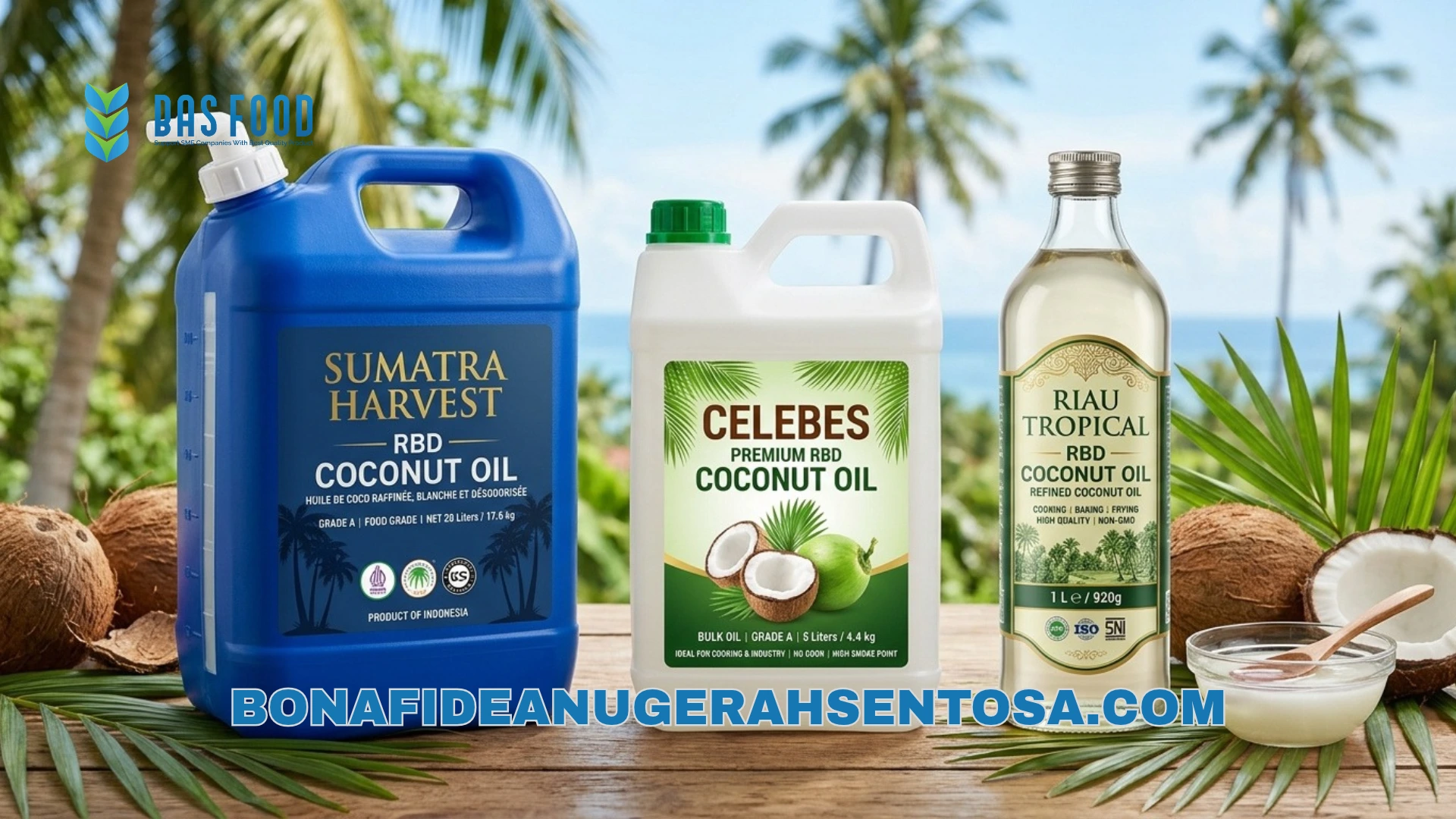
Why RBD Coconut Oil Packaging Matters
RBD coconut oil goes through refining, bleaching, and deodorizing to achieve characteristics suitable for its intended application. After processing, manufacturers must protect the oil from contamination and unsuitable handling conditions. Appropriate packaging helps maintain product integrity from the filling line to the buyer’s facility.
Packaging decisions also affect the cost and efficiency of the supply chain. Container size, tare weight, loading method, transport mode, and unloading equipment can all influence the total landed cost. Therefore, importers should evaluate packaging as part of the complete purchasing decision rather than focusing only on the price per kilogram of oil.
Another important factor is temperature. Coconut oil can become cloudy or solidify as temperatures fall, depending on its composition and the conditions around it. This behavior is natural and does not automatically indicate poor quality. However, it can affect pumping, pouring, and unloading, so buyers must consider temperature conditions when selecting packaging and planning transport.
For international shipments, the packaging system should match the product specification, shipping route, storage environment, and destination requirements. A suitable choice helps reduce avoidable handling problems and makes the receiving process more predictable.
Understanding the Main RBD Coconut Oil Packaging Options
There is no single packaging format that works best for every buyer. The right option depends on order size, available equipment, storage space, shipping method, and how quickly the oil will be used after arrival.
The most common choices for commercial shipments include food grade drums, intermediate bulk containers (IBCs), and flexitanks. Each option offers different advantages in handling, transport efficiency, and operational flexibility. Smaller packaging formats may also suit businesses that need lower quantities or want to distribute oil to multiple customers.
Before selecting a format, buyers should confirm that the packaging is compatible with the intended food or industrial application. They should also check whether the container, liner, seals, and other product-contact materials meet the relevant requirements for the product and destination market.
Food grade drums
Food grade drums are a common choice for businesses that need manageable quantities without moving directly to a large bulk shipment. Depending on the supplier and specification, drums may use suitable metal or plastic construction, with closures designed to protect the contents during storage and transport.
Drums can make inventory management more flexible because buyers can store and use individual units as needed. They may suit food manufacturers, distributors, and businesses that lack large bulk-storage tanks. However, buyers should confirm the actual drum capacity, net oil weight, gross weight, dimensions, closure design, and palletization method before ordering.
IBC containers
IBC containers are larger units designed for bulk liquid handling. Many IBC systems use a rigid outer structure with an inner container and a valve for controlled dispensing. Their design can make them practical for businesses that require more oil per unit than a drum can hold but do not need a full flexitank shipment.
However, not every IBC is suitable for every product or application. Buyers should verify the container’s material, product-contact surfaces, cleaning status where applicable, food-contact suitability, and compatibility with the oil. They should also confirm whether the container is intended for one-time use or an approved reuse cycle.
Flexitank systems
A flexitank is a large flexible liner installed inside a suitable shipping container. It is used to transport compatible non-hazardous bulk liquids, subject to the flexitank system’s specifications and the carrier’s acceptance requirements. For suitable shipments, it can move a large quantity of oil in one container without requiring multiple drums or IBCs.
Flexitanks can be attractive to importers with high-volume requirements and suitable receiving facilities. However, they require careful planning. The shipper and buyer must confirm product compatibility, container suitability, loading and unloading procedures, carrier acceptance, temperature conditions, and the availability of appropriate equipment at the destination.
A flexitank should not be selected based on volume alone. The complete system, including the liner, fittings, loading procedure, and transport arrangements, must be suitable for the oil and the shipping route.
How to Choose the Right Packaging for Your Business
The best packaging option starts with the buyer’s actual requirements. A business receiving a few hundred kilograms may have very different needs from a manufacturer importing multiple tonnes per shipment. Therefore, purchasing teams should begin by identifying their expected order volume, usage rate, storage capacity, and unloading capabilities.
For example, drums may be suitable when a company uses oil gradually or distributes it among several production locations. IBC containers may offer a useful middle ground for businesses with moderate bulk requirements and suitable handling equipment. Flexitanks may work better for large shipments when the receiving facility can unload bulk liquid efficiently.
The following comparison provides a general overview.
| Packaging type | Potential advantages | Key considerations |
|---|---|---|
| Food grade drums | Flexible inventory handling; individual units are easier to allocate | More units to handle; verify material, closures, and net weight |
| IBC containers | Larger unit volume; controlled dispensing through a valve | Requires suitable handling equipment and storage space |
| Flexitank | Efficient bulk transport for compatible products | Requires carrier approval, suitable equipment, and a planned unloading process |
These options are not interchangeable in every situation. Buyers should request a packaging proposal based on their shipment volume, transport route, receiving equipment, and product requirements.
In addition, compare the total cost rather than the container price alone. Consider packaging costs, loading labor, freight, unloading, storage, cleaning or disposal, and any return or recovery arrangements. A format that looks cheaper at the origin may create higher costs at the destination if the buyer lacks the right equipment.
The Role of Food Grade Drums in Safe Oil Handling
Food grade drums can help protect RBD coconut oil from external contamination when the drums and closures are suitable, correctly prepared, and properly sealed. Their individual-unit format also makes them practical for businesses that need to track inventory by lot or distribute oil to several production areas.
Nevertheless, the term “food grade” should not replace documentation. Buyers should ask the supplier or packaging provider for confirmation that the packaging materials are suitable for the intended application. Depending on the market and packaging system, relevant documentation may include material declarations, food-contact compliance information, or other supporting records.
Drum handling also deserves attention. Workers should inspect the packaging for damage, leaks, corrosion where applicable, or compromised closures before accepting the shipment. Drums should be secured during transport and stored in conditions consistent with the supplier’s handling instructions.
The oil’s physical behavior should also inform storage planning. If temperatures fall enough for the oil to solidify, workers may need an approved and controlled warming procedure before transferring the contents. They should avoid uncontrolled heating or any method that could damage the packaging, contaminate the oil, or create a workplace hazard.
For buyers that use drums regularly, it is helpful to standardize dimensions, pallet requirements, labels, and receiving procedures. This approach can simplify warehouse planning and reduce handling errors.
When IBC Containers Make Sense for Bulk Oil Packaging
IBC containers can support efficient bulk oil packaging when a business needs larger units but still wants flexibility in storage and dispensing. Their valves can help transfer liquid into production equipment, provided that the receiving system is compatible and the oil is in a condition suitable for flow.
Before choosing IBCs, buyers should evaluate their warehouse layout and material-handling equipment. The containers may require forklifts or other suitable equipment for safe movement. The receiving area must also have enough space for unloading, inspection, storage, and access to valves.
Compatibility is particularly important when the oil may cool and become more viscous or solid. A valve and transfer arrangement designed for a freely flowing liquid may not perform as expected if the oil has solidified. Buyers should ask about the supplier’s recommended temperature and handling conditions and develop an appropriate procedure for their facility.
IBC systems also differ in construction and intended use. Confirm the container’s capacity, dimensions, tare weight, net fill, valve design, and whether the packaging is new or reused. If reused containers are being considered, verify that their previous use, cleaning, inspection, and suitability meet the buyer’s quality requirements.
For the best results, buyers should evaluate IBC packaging alongside their production schedule. A container that holds more oil can reduce the number of units handled, but only if the business can use the oil at an appropriate rate and store the container correctly.
Flexitank Packaging for International RBD Coconut Oil Shipments
For importers moving large volumes of RBD coconut oil, a flexitank may offer an efficient way to transport compatible bulk liquid in a shipping container. Instead of loading many individual drums or IBCs, the shipper loads the oil into a flexible liner installed in a suitable container.
This arrangement can reduce the number of individual packages that need to be handled. However, the overall benefits depend on the shipment size, route, freight arrangements, destination infrastructure, and the specific flexitank system used. Buyers should compare the full logistics cost before deciding that flexitank shipping is the most economical option.
Successful flexitank shipping requires coordination among the exporter, flexitank provider, freight forwarder, carrier, and importer. The parties should confirm that the oil is compatible with the liner and fittings and that the shipping line accepts the proposed system for the route. Loading limits, container condition, installation, securing, and discharge procedures should follow the approved system’s instructions.
Destination readiness is just as important. The importer needs suitable equipment, trained personnel, and a clear unloading plan. If the oil cools during transit and becomes too firm to discharge normally, the receiving team may need a controlled warming arrangement approved for the product and equipment.
Flexitanks are not suitable for every shipment. Smaller orders, routes with limited acceptance, or facilities without bulk-liquid unloading equipment may be better served by drums or IBC containers. Buyers should confirm feasibility before finalizing the order.
Temperature, Storage, and Packaging Compatibility
Coconut oil’s melting behavior makes temperature management an important part of packaging decisions. RBD coconut oil can become cloudy, partly solid, or fully solid under cooler conditions. This physical change is generally reversible and should not be confused automatically with spoilage or contamination.
The practical impact depends on the packaging format. Drums may be easier to manage as individual units, while IBCs and flexitanks may require more planning if the oil must be transferred through valves, hoses, or pumps. Buyers should discuss expected temperatures during transit and storage with the supplier and logistics provider.
When warming is necessary, use only a controlled method appropriate for the oil and packaging system. Follow the manufacturer’s guidance for temperature limits, equipment compatibility, and safe handling. Avoid direct flame or improvised heating methods that could damage the container, create a fire hazard, or affect product quality.
Storage conditions also influence packaging performance. Keep packages protected from damage, contamination, and unsuitable environmental conditions. Follow the supplier’s storage recommendations, inspect closures and seals, and maintain clear stock records so that product lots can be traced through the receiving and production processes.
For international shipments, these steps should be agreed upon before dispatch. Good planning can help avoid delays caused by unsuitable receiving equipment or unexpected temperature-related handling problems.
Labeling, Traceability, and Export Documentation
Packaging should make the product easy to identify and trace. Depending on the buyer’s requirements and destination-market rules, labels or accompanying documents may include the product name, batch or lot number, net weight, production date, best-before information where applicable, storage instructions, and exporter details.
Accurate labeling helps warehouse teams receive the correct product and maintain traceability. If a quality issue arises, batch identification allows the buyer and supplier to investigate the affected shipment more efficiently. The specific labeling requirements should be confirmed for the product, packaging format, and destination country.
Export documentation should also match the actual shipment. Commercial invoices, packing lists, transport documents, product specifications, and certificates or declarations required by the transaction should contain consistent information. Any required food-contact or packaging documents should be arranged with the appropriate supplier or packaging provider.
For bulk shipments, the parties should agree on how net weight is determined and recorded. Drums and IBCs may be counted and weighed as individual units, while a flexitank shipment may require a different loading and discharge documentation process. Clear records help prevent disputes about quantity and simplify reconciliation when the cargo arrives.
Importers should not assume that one set of documents meets every country’s requirements. Check the applicable rules with the importer, freight forwarder, customs broker, and relevant authorities before shipment.
Choosing an RBD Coconut Oil Supplier for Your Packaging Needs
A dependable supplier should understand that packaging is part of the product delivery process. Buyers should look for clear communication, consistent specifications, relevant quality documentation, and a willingness to discuss logistics requirements before confirming an order.
When evaluating a potential supplier, ask which packaging formats are currently available and whether the supplier can support your planned shipment volume. Confirm the available drum materials and capacities, IBC specifications, or flexitank arrangements. Also clarify the net fill, packaging costs, loading procedure, and responsibilities for arranging the packaging system.
CV Bonafide Anugerah Sentosa may be considered as part of a buyer’s evaluation of Indonesian coconut-based ingredient suppliers. However, buyers should contact the company directly to confirm current RBD coconut oil availability, specifications, packaging options, minimum order quantities, and export terms. Do not assume that a particular container type, capacity, certification, or shipment arrangement is available without confirmation.
For companies sourcing several ingredients, procurement searches may also use terms such as coconut sugar exporter supplier and coconut sugar supplier. These terms relate to a broader coconut-ingredient sourcing context, but coconut sugar and RBD coconut oil are different products and require separate specifications. Buyers should confirm each product’s availability, quality requirements, packaging, and shipping arrangements independently.
The strongest supplier relationship is built on clear expectations. When both parties agree on product specifications, packaging, documentation, and delivery responsibilities, they can reduce avoidable problems and make repeat orders easier to manage.
Conclusion: Let Packaging Protect Your Product and Your Profit
RBD coconut oil packaging affects more than how oil is shipped. It influences product protection, handling efficiency, storage planning, transport costs, and the receiving process. Food grade drums, IBC containers, and flexitanks each offer benefits for different shipment sizes and operational needs.
For smaller or more flexible orders, drums may be practical. IBC containers can suit businesses that need larger units and have suitable handling equipment. Flexitanks may support high-volume shipments when the product, carrier, route, and destination facilities are compatible with the system.
Ultimately, the best choice is the one that meets your product requirements and works across the entire supply chain. Confirm packaging suitability, temperature management, documentation, and unloading arrangements before shipment. By treating packaging as part of your procurement strategy, you can make more informed sourcing decisions and help ensure that RBD coconut oil arrives ready for its intended use.