
When food manufacturers and international distributors source ingredients from overseas, they need more than a competitive price. They also need consistent quality, clear product specifications, dependable communication, and a supplier who understands export requirements. For businesses looking to purchase refined coconut oil, working with a reliable Indonesia RBD coconut oil supplier provides access to coconut-based raw materials and established agricultural supply chains.
Choosing the right Indonesia RBD coconut oil supplier can help importers manage product quality, plan shipments, and build a stable supply relationship. RBD stands for refined, bleached, and deodorized. This processing method produces coconut oil with a lighter appearance and a milder odor than less-refined coconut oil, making it suitable for many food manufacturing and industrial applications when the supplied grade meets the buyer’s requirements.
However, not every supplier offers the same product specifications, packaging formats, documentation, or export services. Therefore, buyers should understand the product, identify their application requirements, and evaluate potential suppliers before placing an order.
In this guide, we explain what RBD coconut oil is, why buyers consider Indonesian suppliers, what to check before purchasing, and how to establish a reliable sourcing process. We also discuss how businesses can approach CV Bonafide Anugerah Sentosa to confirm current product availability and export requirements.
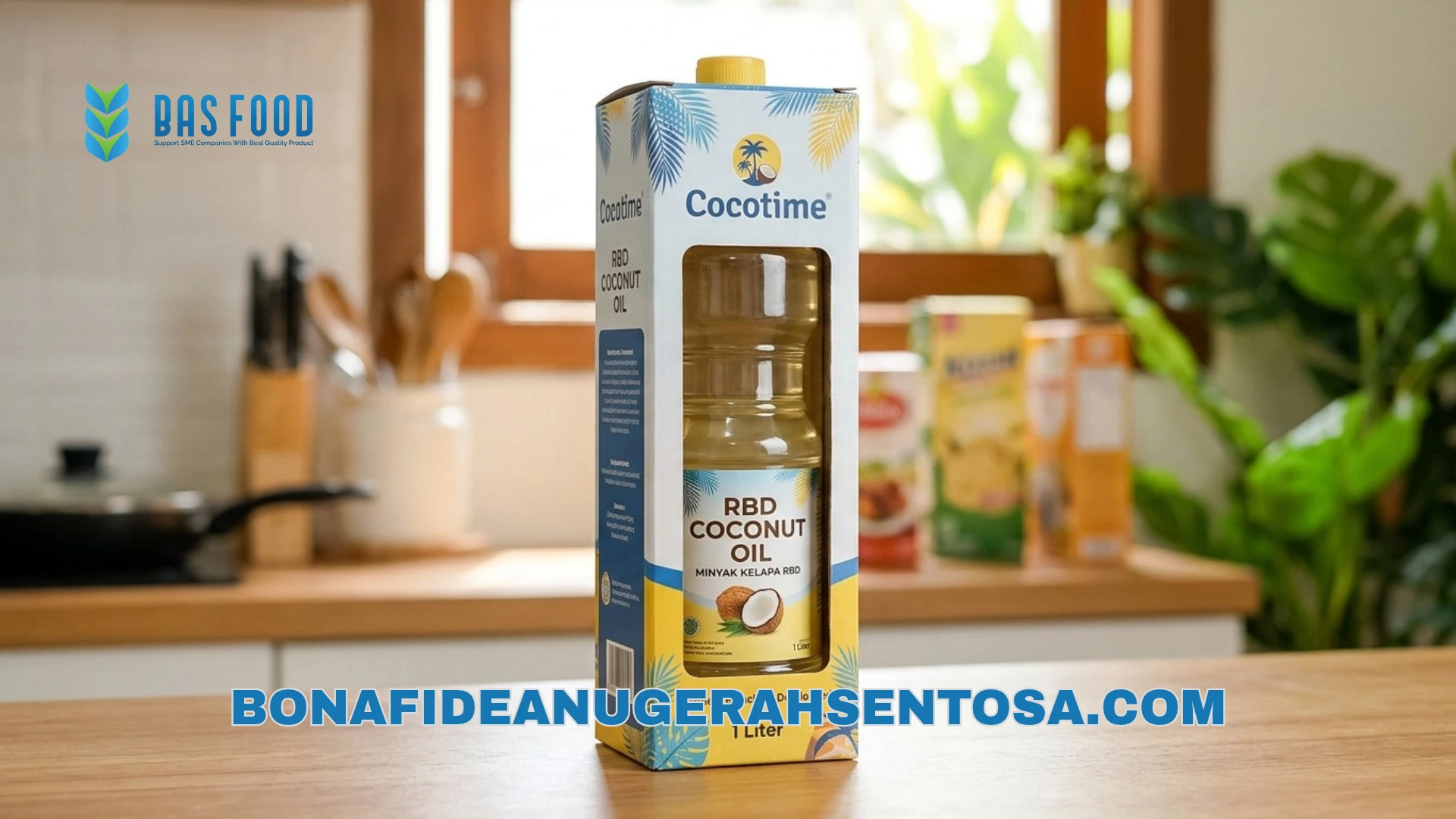
What Is RBD Coconut Oil, and Why Do Buyers Choose It?
RBD coconut oil is coconut oil that has undergone refining, bleaching, and deodorization. Each stage serves a specific purpose. Refining reduces certain unwanted components, bleaching helps remove pigments and other impurities, and deodorization reduces volatile compounds that contribute to strong or undesirable odors.
The finished oil generally has a light color and a mild sensory profile. These characteristics can make it useful for manufacturers who want coconut oil’s functional properties without a pronounced coconut aroma. Nevertheless, the final quality depends on the raw material, processing controls, and the specifications used to evaluate the product.
RBD coconut oil has several potential commercial applications, including:
- Food manufacturing: As a fat ingredient in selected processed foods.
- Bakery products: In formulations that require a suitable vegetable fat.
- Confectionery: In applications where its melting behavior and fat properties fit the recipe.
- Frying: In selected frying processes, subject to performance and stability testing.
- Personal care and industrial products: Where the relevant product grade meets the application’s requirements.
Importantly, RBD coconut oil is not interchangeable with every vegetable oil or specialty fat. Its relatively high saturated fat content and melting characteristics affect how it behaves in different formulations. Buyers should therefore test the oil under actual production conditions before making large-scale purchasing decisions.
For B2B procurement, the first step is to define the intended use. A bakery ingredient buyer may focus on melting behavior and texture, while a food processor may prioritize chemical specifications, food safety documentation, and batch consistency.
Why Source RBD Coconut Oil from Indonesia?
Indonesia is one of the world’s major coconut-producing countries. Its coconut sector supports a wide range of agricultural activities, from traditional farming to processing and trading. This makes Indonesia a market worth considering for businesses seeking coconut-based ingredients.
For international buyers, sourcing from Indonesia can provide access to suppliers connected to local raw materials and processing networks. Depending on the supplier’s capabilities, buyers may be able to discuss product specifications, shipment planning, packaging, and other commercial requirements directly with an Indonesian business.
However, a supplier’s location alone does not guarantee product quality or reliable delivery. Buyers still need to confirm whether the supplier manufactures the oil, processes it through a partner, or trades products from other producers. This distinction helps clarify responsibility for quality control, documentation, and order fulfillment.
A reliable Indonesian coconut oil supplier should be able to explain the product’s origin, intended grade, and available specifications. The supplier should also clarify which documents it can provide and whether the proposed product meets the importer’s destination-market requirements.
When comparing Indonesian suppliers, consider the complete offer rather than focusing only on the quotation. Product consistency, communication, documentation, and the ability to meet agreed shipping schedules can have a significant effect on the total cost of sourcing.
Understanding the Role of a Coconut Oil Manufacturer
A coconut oil manufacturer produces or processes coconut oil and manages the relevant manufacturing activities. Depending on the business model, it may handle raw material preparation, oil extraction, refining, quality testing, packaging, or only selected stages of production.
Understanding the supplier’s role is important because the terms manufacturer, processor, exporter, and trading company describe different business functions. Some companies perform several of these functions, while others work with external production partners.
For buyers, the key question is not simply whether a supplier calls itself a manufacturer. Instead, ask how the supplier manages product quality and whether it can provide the specifications and supporting records required for your order.
Useful questions include:
- Does the supplier manufacture the oil or source it from another producer?
- What product grade and specifications are available?
- How does the supplier identify and trace individual batches?
- Can it provide a certificate of analysis for the relevant batch?
- What packaging formats and order quantities are available?
- Which export documents can it arrange or supply?
- How does it handle quality complaints or products that do not meet specifications?
These questions help establish clear expectations before a purchase. They also make it easier to compare suppliers that may offer different services.
If a supplier works with an external manufacturer, this arrangement does not automatically make it unsuitable. What matters is whether responsibilities are clear, product specifications are documented, and the supplier can manage the order reliably.
Essential Quality Checks Before Buying RBD Coconut Oil
Product quality should be a central part of every sourcing decision. Before purchasing from an Indonesia RBD coconut oil supplier, buyers should obtain a current product specification and review the parameters that matter to their intended application.
Common quality parameters include free fatty acids, moisture and volatile matter, insoluble impurities, color, odor, and fatty acid composition. Depending on the intended use and the agreed specification, additional measurements such as peroxide value, iodine value, or other oxidation indicators may also be relevant.
The supplier should state the test methods, units, and acceptance limits for the applicable parameters. This makes it easier to compare offers fairly and reduces confusion when the buyer evaluates laboratory results.
Certificate of analysis
A certificate of analysis, or CoA, records analytical results for a particular product or batch. Buyers should check the product name, batch number, testing date, test methods, and reported values.
The CoA should match the relevant specification and, where applicable, the shipment being purchased. However, a CoA does not automatically prove compliance with every food safety rule or destination-market requirement. Buyers may need additional documentation or independent testing depending on their risk assessment.
Food safety and traceability
For edible applications, buyers should confirm that the product is intended for food use and that the supplier can provide the necessary supporting documentation. Depending on the destination market, requirements may include ingredient information, traceability records, contaminant testing, and other regulatory documents.
Importers should also confirm whether any requested certifications are available and valid for the relevant product and production site. Never assume that a supplier holds a particular certification without checking the supporting evidence.
Packaging and handling
Packaging should protect the oil from contamination and be suitable for storage and transportation. Buyers should confirm container materials, filling arrangements, labeling, lot identification, and handling instructions.
Coconut oil can solidify or become cloudy at cooler temperatures. This is a natural physical characteristic and does not automatically indicate a quality problem. Nevertheless, suppliers and buyers should agree on appropriate handling conditions to support efficient unloading and production use.
Buying in Volume: Choosing the Right Bulk Oil Supplier
For food manufacturers, distributors, and industrial buyers, purchasing in larger quantities can simplify procurement and support production planning. However, bulk purchasing requires careful coordination because storage capacity, transportation, packaging, and product consistency all affect the final cost.
A bulk oil supplier should be able to explain its available order quantities, packaging formats, lead times, and shipment arrangements. The exact options vary by supplier, so buyers should request current details instead of assuming that every format or volume is available.
Before placing a bulk order, calculate the total landed cost rather than comparing the product price alone. Relevant costs may include packaging, inland transportation, freight, insurance, customs duties, taxes, inspection, port charges, and storage. The applicable costs depend on the destination country and the agreed trade terms.
Buyers should also consider their consumption rate. Ordering more oil than a business can store or use within its planned period may create avoidable inventory costs. On the other hand, ordering too little can increase the frequency of shipments and create supply interruptions.
A practical bulk procurement checklist includes:
- Confirm the product grade and specification.
- Request a representative sample and review the CoA.
- Verify the minimum order quantity and available packaging.
- Confirm production and shipment lead times.
- Review storage and handling requirements.
- Agree on documentation and quality acceptance procedures.
- Calculate the expected landed cost.
- Confirm payment terms and responsibilities in writing.
These steps help buyers compare suppliers based on their ability to support the full purchasing process, not just the quoted price per kilogram or metric ton.
How to Compare Indonesian Coconut Oil Suppliers
Comparing suppliers becomes easier when buyers use the same evaluation criteria for each quotation. This approach helps identify differences in product quality, service, and commercial terms.
Start by checking whether each supplier offers the same grade of RBD coconut oil. Two quotations may appear similar but describe products with different specifications, intended uses, or documentation. A lower price is not necessarily better if the product does not meet the buyer’s needs.
Next, evaluate communication and transparency. A dependable supplier should respond clearly to questions about specifications, packaging, documentation, and delivery schedules. It should also explain any limitations rather than promising requirements it cannot confirm.
The following comparison areas can help structure the evaluation:
| Evaluation area | What buyers should verify |
|---|---|
| Product specifications | Agreed limits, test methods, and intended grade |
| Quality documentation | CoA availability and batch identification |
| Food safety | Relevant documents and destination-market compliance |
| Supply arrangements | Available quantity, lead time, and repeat-order planning |
| Packaging | Suitable materials, sizes, and handling instructions |
| Export experience | Documentation process and shipment coordination |
| Commercial terms | Price, payment terms, Incoterms, and additional costs |
| Communication | Clear responses and a process for resolving issues |
It is also sensible to begin with a sample or trial order when practical. This gives the buyer an opportunity to assess product performance and supplier communication before committing to a larger shipment.
For ongoing supply, keep records of specifications, CoAs, shipment performance, and any quality concerns. These records help businesses monitor consistency and make more informed decisions when placing repeat orders.
Working with CV Bonafide Anugerah Sentosa
For businesses exploring Indonesian commodity sourcing, CV Bonafide Anugerah Sentosa operates in the export sector. Companies interested in RBD coconut oil can contact the business directly to confirm current availability, product specifications, packaging options, minimum order quantities, and export terms.
Before requesting a quotation, prepare a clear description of your requirements. Include the intended application, estimated order volume, destination country, preferred packaging, and any technical or regulatory specifications that your business must meet.
For example, a food manufacturer may require a specific free fatty acid limit, a defined moisture specification, and a batch-specific CoA. A distributor may place greater emphasis on packaging, shipment planning, and repeat-order arrangements. Providing these details helps establish whether the available product fits the purchasing requirement.
Buyers should also confirm the company’s precise role in supplying the product. Ask whether it manufactures the oil directly or sources it through a production partner. This is a normal part of B2B due diligence and helps establish which party is responsible for manufacturing records, quality testing, and shipment documentation.
When discussing an order, request the latest specification and confirm that the commercial offer matches it. Any essential quality limits, testing arrangements, packaging details, and delivery conditions should be documented in the purchase agreement.
This approach helps create a transparent working relationship and gives both parties a clearer basis for managing expectations.
Export Documentation and International Shipping Considerations
International procurement involves more than choosing a product and agreeing on a price. Buyers and suppliers must also coordinate commercial documents, transport arrangements, and any requirements that apply to the destination market.
Depending on the transaction, relevant documents may include a commercial invoice, packing list, bill of lading, certificate of origin where required, product specification, certificate of analysis, and other documents requested by the importer or authorities. The exact set varies by country, product classification, and trade arrangement.
Before shipment, buyers should confirm the product description, quantity, packaging details, consignee information, and applicable customs classification. Inaccurate or inconsistent documentation can lead to delays, additional costs, or requests for clarification.
It is also important to agree on the Incoterms rule used in the transaction. These rules define key responsibilities for delivery, costs, and risk between the seller and buyer. Both parties should specify the named place or port and the applicable Incoterms version in the sales agreement.
Finally, plan storage and unloading before the cargo arrives. Coconut oil’s physical state can change with temperature, so buyers should follow the supplier’s handling instructions and ensure that their facilities can manage the product appropriately.
Good coordination between the supplier, freight forwarder, customs broker, and importer helps reduce avoidable problems and supports smoother deliveries.
Conclusion: Build a Smarter RBD Coconut Oil Supply Strategy
Choosing the right Indonesia RBD coconut oil supplier involves more than finding an attractive price. Buyers should evaluate product specifications, quality documentation, food safety requirements, packaging, supply capacity, export arrangements, and communication before placing an order.
Indonesia offers a coconut-based supply market worth exploring, but each supplier must be assessed on its actual capabilities. A clear specification, a suitable certificate of analysis, and a structured supplier evaluation can help importers reduce risk and make better procurement decisions.
Whether you are a food manufacturer, ingredient distributor, or industrial buyer, define your requirements first and confirm every important detail with the supplier. CV Bonafide Anugerah Sentosa can be contacted to discuss current product availability and sourcing needs. Confirm the available grade, documentation, packaging, and export terms directly before making a purchasing commitment.
A careful sourcing process helps businesses move beyond price comparisons and build supply relationships that support quality, transparency, and long-term planning.