
When buying coconut oil for food manufacturing, personal care products, or industrial applications, color is often one of the first things buyers notice. A clean, consistent appearance can make a product look appealing, but what does the color actually tell you about the oil? More importantly, does a lighter color always mean better quality? Understanding RBD coconut oil color helps importers, distributors, and manufacturers make more informed purchasing decisions. RBD stands for refined, bleached, and deodorized. These processing steps help remove unwanted substances, reduce color, and create an oil with a more neutral appearance and odor than many unrefined coconut oils.
However, color is only one part of the quality picture. Processing conditions, raw material quality, storage, temperature, and the presence of impurities can all influence how coconut oil looks. Therefore, buyers should evaluate appearance alongside technical specifications and laboratory results.
In this guide, we will explain the typical color of RBD coconut oil, explore what affects its appearance, discuss common quality concerns, and share practical tips for evaluating suppliers. Whether you are a food manufacturer, bulk importer, or ingredient distributor, this information can help you assess coconut oil with greater confidence.
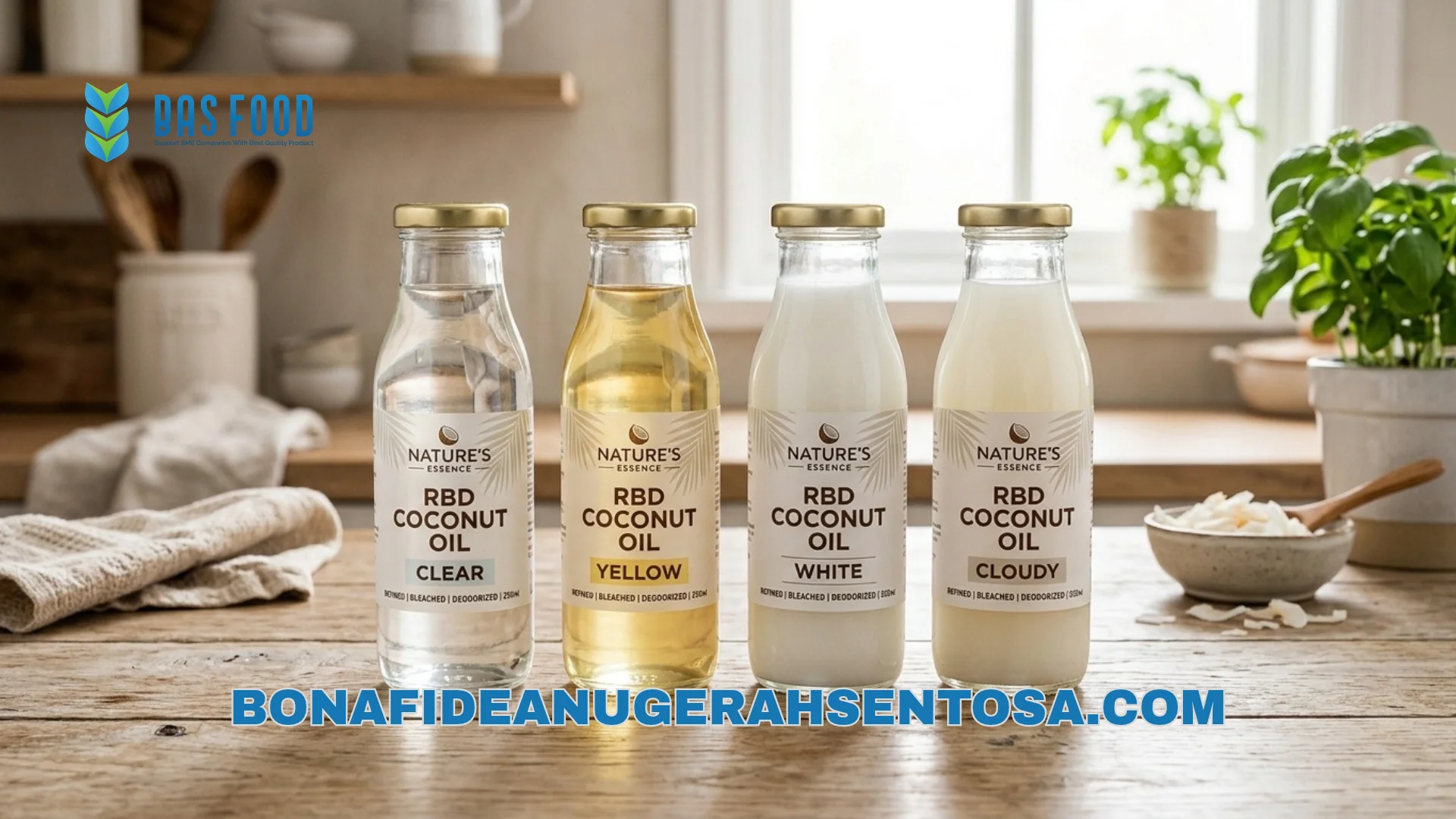
What Is the Typical RBD Coconut Oil Color?
High-quality RBD coconut oil is generally clear and colorless when it is fully liquid under suitable conditions. Unlike some unrefined coconut oils, which may have a noticeable cream, yellow, or slightly cloudy appearance, properly processed RBD coconut oil usually has a clean and neutral look.
Nevertheless, appearance depends on temperature. Coconut oil has a relatively high melting point for a common vegetable oil, so it may become cloudy, partly solid, or fully solid in a cool environment. This change can affect how light passes through the oil, making it appear white or opaque rather than transparent.
For this reason, buyers should evaluate the oil under consistent conditions. If one sample is warm and liquid while another is cool and partly crystallized, comparing their color directly may lead to the wrong conclusion. Both samples may be acceptable even though they look different.
A useful inspection process starts by allowing the samples to reach the same controlled temperature. Buyers can then observe the color, clarity, and presence of visible particles. If the oil remains unusually dark, contains unexpected sediment, or shows an appearance that differs from the agreed specification, further investigation may be necessary.
It is also important to remember that visual appearance alone cannot prove purity, safety, or compliance. A clear sample may still require laboratory testing, while a white or cloudy sample may simply reflect normal crystallization.
How Does Refining Affect Coconut Oil Appearance?
The refining process plays a major role in creating the familiar appearance of commercial RBD coconut oil. Raw coconut oil may contain free fatty acids, pigments, suspended particles, trace contaminants, and other substances that influence its color and clarity. The amount and type of these substances depend partly on the raw material and the way the oil was produced and handled.
During refining, processors use suitable methods to reduce unwanted components. The exact process varies between facilities, but the objective is to improve the oil’s quality and make it more suitable for its intended application. Effective refining can help produce a more consistent appearance from batch to batch.
Bleaching is especially relevant when discussing color. Despite its name, bleaching does not necessarily involve household bleaching chemicals. In edible oil processing, it commonly uses approved adsorbent materials, such as bleaching earth or activated carbon, to capture pigments and certain impurities. The oil is then separated from the adsorbent material.
Deodorizing addresses a different issue. It removes volatile compounds that contribute to unwanted odors and flavors. As a result, deodorized coconut oil generally has a more neutral sensory profile than unrefined coconut oil. However, deodorizing should not be confused with bleaching, because the two operations serve different purposes.
When these processing stages are properly controlled, they help create the clear, neutral appearance that many commercial buyers expect. Even so, the final result depends on the overall process, so buyers should rely on the supplier’s specifications and relevant quality tests rather than appearance alone.
What Factors Influence RBD Coconut Oil Color?
Several factors can affect RBD coconut oil color, beginning with the quality of the raw material. Coconut material that has been poorly handled or stored may introduce substances that complicate processing. Raw material condition can also affect other properties, including free fatty acid levels and the overall quality of the oil before refining.
Processing conditions are another important factor. The type and amount of bleaching adsorbent, contact time, temperature, filtration efficiency, and other process variables can influence the removal of pigments and suspended matter. If the process is not properly controlled, the final oil may not meet the expected appearance specification.
Storage conditions also matter. Exposure to heat, light, air, and unsuitable storage materials may affect the product over time. Depending on the conditions, these factors can contribute to deterioration or changes in the oil’s appearance and odor. Good storage practices help protect the oil and maintain its quality during handling and distribution.
Finally, temperature can change the way coconut oil looks without indicating a quality problem. When the oil cools, crystals may form and scatter light, making it appear white or cloudy. When the oil warms and melts, it may become transparent again.
Because these factors can overlap, buyers should investigate unexpected color changes systematically. First, confirm the temperature and physical state of the sample. Next, compare it with the agreed specification and check the storage history. If the difference remains unexplained, ask the supplier for technical clarification or consider additional testing.
Clear, Yellow, White, or Cloudy: What Do Different Appearances Mean?
Clear and colorless oil
Is the typical appearance expected from fully liquid RBD coconut oil. It allows light to pass through with little visible obstruction and usually has no obvious suspended particles. This appearance is consistent with effective refining, although it does not independently establish that the oil meets every quality requirement.
Buyers should still check the product’s documentation and other quality parameters. Color and clarity are useful screening observations, but they cannot replace a certificate of analysis or other appropriate testing.
White or solid oil
White or opaque coconut oil is often the result of cooling and crystallization. As the temperature drops, the oil can become partly solid or fully solid. The crystals change how light passes through the material, making it look white rather than transparent.
This change is generally a normal physical behavior of coconut oil. If the oil melts and returns to a clear liquid under suitable conditions, the change may simply reflect temperature rather than deterioration.
However, buyers should confirm that the product behaves as expected for its grade. Persistent unusual particles, unexpected discoloration after melting, or other unexplained changes should be discussed with the supplier.
Yellow or darker oil
A noticeable yellow tint or darker appearance may have several explanations. It could reflect differences in processing, residual pigments, contamination, oxidation-related changes, or the natural variation of the starting material. The appearance alone cannot identify the cause.
If a product is specified as clear and colorless when liquid, a persistent yellow or dark tint deserves attention. Buyers should compare the sample with the approved reference and request an explanation from the supplier. Where necessary, they can arrange suitable laboratory testing.
Cloudy or hazy oil
Cloudiness may result from crystallization, suspended particles, moisture, or other substances. The first step is to determine whether the sample is fully liquid and whether the cloudiness disappears under suitable, controlled conditions.
If the cloudiness remains after the oil has reached an appropriate liquid state, the buyer should investigate further. The supplier may need to review filtration, handling, storage, or other relevant process details.
In every case, the key is to assess appearance consistently and avoid treating one visual observation as a definitive diagnosis.
Does Lighter Coconut Oil Always Mean Better Oil Quality?
It is tempting to assume that the lighter the oil, the better its quality. However, this is an oversimplification. Color can provide useful information about processing and appearance, but it does not measure every aspect of oil quality.
For example, an oil can look clear and colorless while still having an undesirable free fatty acid level, an elevated oxidation indicator, or another specification that does not meet the buyer’s requirements. These issues may not be visible to the naked eye.
Likewise, white or cloudy coconut oil is not necessarily inferior. If the oil has cooled and crystallized, the appearance may be completely normal. The same product may become clear after it returns to a fully liquid state.
A better quality assessment combines visual inspection with the relevant technical measurements. Depending on the product and its intended use, buyers may review free fatty acid content, acid value, peroxide value, moisture and volatile matter, fatty acid composition, and other applicable parameters.
The agreed specification should define acceptable limits and test methods. This gives both the buyer and supplier a consistent basis for evaluating each batch. It also reduces disputes caused by subjective descriptions such as “very clear,” “premium white,” or “extra clean” when those descriptions lack measurable criteria.
In short, appearance is a useful first check, but reliable purchasing decisions require a broader view of quality, safety, and product suitability.
How to Check RBD Coconut Oil Color Before Purchasing in Bulk
Before placing a large order, buyers should establish a clear method for evaluating samples. A consistent process helps prevent differences in lighting, temperature, and handling from influencing the decision.
Start by requesting a representative sample of the product you intend to purchase. Confirm that the sample corresponds to the correct grade and, where possible, the same product specification that will apply to the shipment. If the supplier offers several coconut oil grades, make sure you are comparing like with like.
Next, inspect the sample in a clean, transparent container under consistent lighting. Record whether the oil is liquid, partly solid, or fully solid. Note its color, clarity, and any visible particles. Avoid comparing a warm sample with a cold sample, because temperature can create misleading differences.
If the oil is cloudy, allow it to reach an appropriate controlled temperature for evaluation. Do not use uncontrolled heating or expose the sample to unnecessary heat. Once the sample is fully liquid, check whether the appearance matches the agreed requirement.
Then compare your observations with the supplier’s technical data sheet, COA, and any agreed reference sample. If a difference remains, request clarification before approving the order. For high-value purchases or applications with strict specifications, an independent laboratory may provide additional assurance.
Finally, document the inspection results and acceptance criteria. A written agreement is more reliable than a general verbal promise about color. It should state the expected appearance, testing conditions, and procedure for handling results that fall outside the specification.
Important Laboratory Tests Beyond Color
Visual inspection is only one part of quality control. Buyers should also understand the laboratory measurements commonly used to assess refined coconut oil.
Free fatty acid content and acid value help assess the amount of free fatty acids in the oil. Elevated results may indicate problems with the raw material, handling, or processing, although interpretation depends on the product specification and applicable test method.
Peroxide value is commonly used to measure primary oxidation products. It can help identify early signs of oxidative deterioration, but it does not capture every stage of oxidation. Other tests may be useful when a more complete assessment is required.
Moisture and volatile matter are relevant because excess moisture or volatile components can affect storage stability and processing performance. Buyers should compare results with the limits established for the intended product and application.
Fatty acid composition provides information about the relative proportions of the main fatty acids in the oil. This profile can help confirm whether the product is consistent with the expected characteristics of conventional coconut oil. However, it does not independently prove the absence of all contaminants or confirm every aspect of product quality.
Depending on the application and destination market, additional checks may include contaminant testing, traceability records, food safety documentation, and regulatory compliance documents. The specific requirements should be agreed upon before shipment.
Together, these checks provide a stronger basis for evaluating RBD coconut oil than color alone. They also help procurement teams make consistent decisions when reviewing suppliers and comparing batches.
Storage and Handling: How to Maintain Coconut Oil Appearance
Correct storage helps preserve the appearance and quality of RBD coconut oil throughout transportation and warehousing. Buyers should follow the supplier’s handling instructions and use clean, suitable containers that protect the product from contamination and unwanted exposure to air, light, and moisture.
Temperature management is particularly important. Coconut oil may become cloudy or solid when stored in a cool environment. This change does not automatically mean that the product has deteriorated, but it can affect sampling, pumping, filling, and other processing operations.
If the oil must be warmed before use, follow appropriate procedures for the product and equipment. Use controlled conditions and avoid unnecessary or prolonged heating. The goal is to reach the required handling temperature without exposing the oil to conditions that could affect its quality.
Packaging also matters. Buyers should confirm that the selected container or bulk transport system is suitable for the oil and the intended shipping conditions. Packaging should protect the product and support clean handling during loading, transit, unloading, and storage.
During receiving inspections, record the condition of the packaging and check for signs of leakage, damage, contamination, or unexpected changes. If a shipment arrives with unusual discoloration or odor, document the condition and contact the supplier before making assumptions about the cause.
A practical storage plan helps reduce unnecessary product handling and makes it easier to maintain consistent quality from arrival to final use.
Choosing a Reliable Supplier of RBD Coconut Oil
For international buyers, supplier selection should involve more than a comparison of prices. A dependable sourcing process includes clear product specifications, suitable packaging, consistent documentation, transparent communication, and the ability to address technical questions.
Begin by requesting a current technical data sheet and a COA representative of the offered product. Confirm the exact product name, appearance requirements, intended application, and relevant quality limits. If a specific color standard matters to your production process, describe it clearly and agree on how the supplier will assess it.
Next, ask about batch identification and traceability. Buyers should understand how the supplier identifies shipments, links documents to the product, and handles complaints or out-of-specification results. It is also helpful to agree on sample approval, pre-shipment inspection, and any independent testing requirements before placing a large order.
CV Bonafide Anugerah Sentosa operates in the Indonesian commodity supply and export sector. Businesses interested in sourcing coconut-derived ingredients can contact the company to confirm its current product range and whether the required RBD coconut oil grade is available. Buyers should request the latest technical specifications and verify the product, packaging, order quantity, and export terms directly.
The terms coconut sugar exporter supplier and coconut sugar supplier are relevant to broader searches for Indonesian coconut-based ingredients, but they do not by themselves confirm the availability of RBD coconut oil. Buyers should verify each product category separately and avoid assuming that a supplier of one coconut-derived product automatically offers another.
Similarly, Proveedor de productos orgánicos means “organic products supplier” in Spanish. Buyers searching with this phrase should verify the specific product’s certification status, scope, and validity rather than assuming that a company or every item it sells is certified organic. Organic claims must be supported by appropriate documentation for the relevant market.
A reliable supplier relationship begins with clear expectations. By confirming product availability, technical specifications, and documentation before ordering, buyers can reduce uncertainty and make more confident purchasing decisions.
Conclusion: Look Beyond Appearance to Understand Oil Quality
The color of RBD coconut oil provides a useful first impression of its processing and physical condition. When fully liquid, conventional RBD coconut oil is generally clear and colorless. However, temperature can make it cloudy or white through normal crystallization, so buyers should avoid judging quality from appearance alone.
Understanding the relationship between refining, bleaching, deodorizing, storage, and temperature helps importers evaluate samples more consistently. It also makes it easier to recognize when an unexpected color change deserves further investigation.
For a stronger assessment, combine visual inspection with the relevant laboratory results, including free fatty acid content, peroxide value, moisture, and other parameters required for the intended application. A clear technical specification and a batch-specific COA provide a more reliable basis for purchasing decisions than general appearance claims.
If you are sourcing coconut-derived ingredients from Indonesia, contact CV Bonafide Anugerah Sentosa to confirm current product availability and request the appropriate documentation for your requirements. Before placing a bulk order, agree on the product grade, appearance criteria, quality limits, packaging, and export terms.
Ultimately, good sourcing decisions come from combining careful observation with reliable documentation. When buyers look beyond color alone, they can evaluate coconut oil more accurately, reduce avoidable disputes, and build stronger supplier relationships.