
Coconut sugar syrup for beverages is becoming an interesting ingredient for drink manufacturers, cafés, foodservice businesses, and beverage brands looking for a distinctive liquid sweetener. Unlike dry sweeteners, syrup can be incorporated directly into liquid recipes, making it practical for many beverage applications.
For B2B buyers, however, choosing a syrup is not simply about sweetness. Beverage manufacturers also need to consider consistency, flavor, color, viscosity, solubility, packaging, storage, and supply reliability. These factors can affect both production efficiency and the final drinking experience.
This guide explains how coconut sugar syrup can be used in beverages, what manufacturers should consider during beverage formulation, and how to evaluate a coconut sugar supplier for commercial applications.
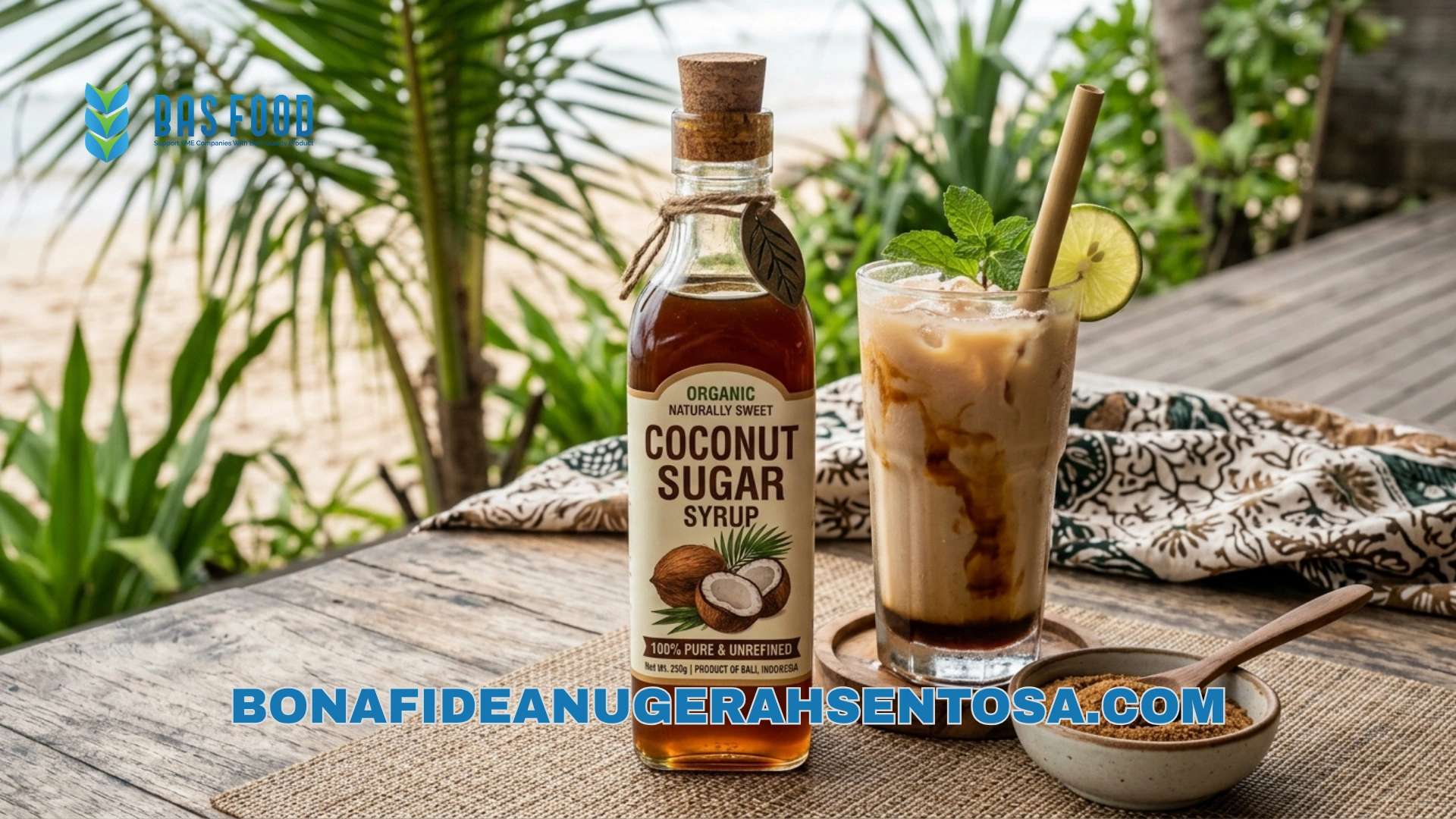
What Is Coconut Sugar Syrup for Beverages?
Coconut sugar syrup is a liquid sweetener produced from coconut sugar or coconut sap-based processing. It has a liquid form that makes it convenient for applications where a manufacturer needs sweetness to distribute through a beverage.
The syrup can have a characteristic caramel-like sweetness and naturally darker color compared with many refined liquid sweeteners. However, its exact appearance, flavor, concentration, and flow behavior can vary according to processing and product specifications.
For beverage producers, this flexibility makes coconut sugar syrup worth considering for different drink concepts. It may be used in ready-to-drink beverages, coffee drinks, tea-based products, smoothies, dessert beverages, drink concentrates, and other liquid formulations.
Most importantly, buyers should evaluate the syrup according to the intended application rather than assuming that every coconut sugar syrup has identical characteristics.
Why Liquid Sweeteners Matter in Beverage Formulation
Beverage formulation involves much more than adding a sweetener. A manufacturer needs to balance sweetness, acidity, flavor, texture, color, aroma, and overall stability. Therefore, the choice of sweetener can influence several parts of the finished beverage.
A liquid sweetener can offer a practical advantage because it is already in a form that can be incorporated into liquid systems. This can simplify ingredient handling and reduce the need to dissolve dry sugar during certain production processes.
Moreover, coconut sugar syrup can contribute more than sweetness. Depending on its specification, it may also contribute color and a recognizable flavor profile. Consequently, beverage developers need to test it as both a sweetening ingredient and a flavor component.
This is especially important when developing products with delicate flavors. A syrup with a stronger flavor or darker color may behave differently from a lighter liquid sweetener. Therefore, pilot testing remains an important step before commercial production.
Beverage Applications for Coconut Sugar Syrup
One reason coconut sugar syrup attracts attention is its versatility. Different beverage categories can use liquid sweeteners in different ways, so manufacturers can adjust the formulation according to their product concept.
Coffee and Café Beverages
Coffee is one of the most practical applications for coconut sugar syrup. Cafés and beverage brands can incorporate liquid sweeteners into iced coffee, milk-based coffee, specialty coffee drinks, and other menu creations.
Because the syrup is already liquid, it can be easier to blend into cold or warm beverages than a dry sweetener. This can also make it convenient for café staff who need a consistent sweetening method during busy service periods.
For commercial coffee products, however, developers should check how the syrup interacts with milk, coffee compounds, flavors, and other ingredients. Small-scale testing can help determine the appropriate dosage and flavor balance.
Tea and Tea-Based Drinks
Coconut sugar syrup can also work with tea-based beverages. It can be considered for iced tea, milk tea, flavored tea, herbal beverage concepts, and other drink formulations.
The natural character of coconut sugar may complement tea flavors, particularly when the formulation is designed around warm, caramel-like, or tropical flavor notes.
Nevertheless, tea formulations can be sensitive to color and flavor changes. As a result, beverage developers should test the syrup at several inclusion levels rather than selecting a dosage based only on sweetness.
Smoothies and Blended Drinks
Smoothies often contain fruit, dairy or plant-based ingredients, ice, and flavoring components. A liquid sweetener can be incorporated into these systems during blending.
Coconut sugar syrup may be useful when manufacturers want a sweetener that contributes a recognizable flavor along with sweetness. It can also fit beverage concepts built around tropical or natural ingredient themes.
However, the final formulation should be tested for texture, sweetness distribution, and flavor balance. Fruit already contains natural sugars, so the amount of added syrup needs to match the complete recipe.
Ready-to-Drink Beverages
Ready-to-drink beverages require more detailed formulation work because the product must remain consistent throughout its intended storage and distribution conditions.
When using coconut sugar syrup for beverages in this category, manufacturers should evaluate factors such as ingredient compatibility, viscosity, color, sweetness, sedimentation where relevant, packaging, and storage conditions.
The syrup should therefore be treated as one component of a complete formulation rather than as a standalone solution. Product developers need to evaluate how it performs alongside all other ingredients.
Beverage Concentrates and Drink Mixes
Coconut sugar syrup may also be considered for beverage concentrates or liquid bases. These products often require controlled sweetness and consistent handling because the concentrate is later diluted or combined with other ingredients.
In this situation, syrup specifications become particularly important. Differences in concentration or viscosity can affect the amount of syrup required during formulation.
For B2B buyers, requesting product specifications and samples before placing a larger order can help determine whether a syrup is suitable for the intended manufacturing process.
How Coconut Sugar Syrup Affects Beverage Formulation
A successful beverage formulation depends on balance. When introducing coconut sugar syrup, manufacturers should evaluate several characteristics instead of looking only at sweetness.
Sweetness and Flavor
The first consideration is sweetness. However, sweetness alone does not determine whether a syrup works well in a beverage.
Coconut sugar syrup can have its own flavor character. Therefore, beverage developers should evaluate both the sweetness level and the flavor contribution. In some recipes, the flavor may be an important part of the product concept. In others, the manufacturer may want the sweetener to remain less noticeable.
This is why application testing is essential.
Color
Coconut sugar-based ingredients can contribute color to beverages. The effect may be desirable for products where a darker or more natural-looking appearance fits the concept.
On the other hand, a darker syrup may not be appropriate for every drink. For example, a manufacturer developing a clear or lightly colored beverage may need to consider how the syrup affects the final appearance.
Consequently, color should be included in the formulation assessment from the beginning.
Viscosity
Viscosity is another important factor. A syrup that flows differently can affect dosing, pumping, mixing, and dispensing.
For industrial beverage production, consistent viscosity can make ingredient handling easier. Nevertheless, viscosity may change depending on factors such as formulation, concentration, temperature, and storage conditions.
Therefore, B2B buyers should ask suppliers for relevant product information and conduct their own application tests under actual processing conditions.
Solubility and Mixing
Because the ingredient is already liquid, coconut sugar syrup can be convenient for beverage production. However, convenient handling does not mean that every formulation will behave identically.
Manufacturers should check how quickly the syrup disperses and whether it creates any unwanted changes in the finished drink. Mixing order can also affect the result.
For this reason, a beverage development team should test the syrup using the same equipment and process conditions planned for production whenever possible.
Choosing the Right Coconut Sugar Syrup for Commercial Drinks
Choosing an ingredient for commercial production requires a different approach from choosing an ingredient for home use. A B2B buyer needs consistency, documentation, communication, and dependable supply.
First, define the application clearly. Is the syrup intended for coffee, tea, smoothies, RTD beverages, concentrates, or another drink category? The answer can influence the desired flavor, color, viscosity, and other specifications.
Next, identify the technical requirements. These may include sweetness, moisture or solids-related specifications, viscosity, color, packaging format, storage requirements, and other parameters relevant to the formulation.
After that, request a sample. Testing a sample allows the product development team to evaluate the syrup in the actual beverage recipe.
Packaging and Storage Matter More Than Many Buyers Expect
Even a well-formulated syrup needs suitable packaging. Liquid ingredients can be exposed to contamination, leakage, temperature changes, or other handling risks if packaging is not appropriate for the supply chain.
For export buyers, packaging should therefore be considered together with transportation and storage. The journey may involve factory handling, inland transportation, port operations, ocean freight, customs clearance, and destination warehousing.
The packaging format should protect the product and support practical handling throughout this process.
Storage is equally important. Buyers should follow the supplier’s recommended storage conditions and protect the product from unsuitable environmental conditions. Once the product reaches the beverage factory, storage procedures should also be consistent with the manufacturer’s food safety and quality systems.
From Sample Testing to Full-Scale Production
A common mistake in ingredient sourcing is moving directly from a product description to a large commercial purchase. Beverage manufacturers can reduce uncertainty by creating a structured testing process.
Start with a laboratory or small pilot batch. Test the syrup at different inclusion levels and compare the results. Look at sweetness, flavor, color, texture, and overall consumer experience.
Next, conduct a larger pilot under conditions closer to commercial production. Check pumping, dosing, mixing, and processing behavior. This stage can reveal practical issues that may not appear during simple kitchen-scale testing.
Finally, document the approved formulation and product specifications. This creates a reference point for future purchasing and quality checks.
A consistent specification becomes particularly valuable when a beverage brand scales production across multiple batches.
Working With an Experienced Coconut Sugar Exporter Supplier
For international buyers, the supplier relationship extends beyond the product itself. A reliable export partner needs to communicate clearly about specifications, packaging, documentation, lead times, and shipment requirements.
CV Bonafide Anugerah Sentosa can be considered by buyers looking for an Indonesian source of coconut-based sweetener products. As a coconut sugar exporter supplier, the company serves the broader B2B sourcing process rather than treating the transaction as a simple commodity purchase.
However, buyers should still evaluate every supplier according to their own procurement standards. Product samples, specifications, communication, packaging, documentation, and supply capability should all be reviewed before commercial approval.
A good sourcing process creates clarity on both sides. The buyer understands what will be supplied, while the supplier understands the application and requirements.
Why Application-Specific Specifications Are Important
There is no single specification that automatically makes a syrup suitable for every beverage. A coffee manufacturer may prioritize flavor and viscosity differently from a ready-to-drink beverage producer.
For example, a café syrup may be evaluated mainly for flavor, handling, and dispensing. Meanwhile, an industrial beverage manufacturer may require more detailed specifications because the syrup will become part of a standardized production process.
Therefore, buyers should communicate the intended application to their coconut sugar supplier. Sharing information about the beverage category, production process, packaging format, and target market can help the supplier understand the commercial requirement.
This approach can also make sample evaluation more useful because the product is being assessed against a real application instead of a general description.
Common Mistakes When Buying Coconut Sugar Syrup for Beverages
One common mistake is focusing only on price. A lower ingredient price does not automatically mean lower total production cost. If the syrup creates handling problems, inconsistent results, or additional processing requirements, the overall cost can increase.
Another mistake is assuming that all coconut sugar syrup products are identical. Processing methods, concentration, specifications, packaging, and handling can differ between suppliers.
Buyers should also avoid skipping sample testing. A syrup can look suitable on paper but perform differently in a specific beverage formulation.
Finally, do not overlook communication. International B2B sourcing requires clear information about specifications, packaging, shipping, documentation, and repeat orders. A supplier that communicates clearly can make the procurement process much easier to manage.
Building Better Beverage Products With Coconut Sugar Syrup
The growing interest in alternative sweetening ingredients gives beverage manufacturers more options when developing new products. Coconut sugar syrup can be particularly interesting because it combines the convenience of a liquid ingredient with the characteristic qualities associated with coconut sugar.
However, successful commercial use depends on the complete formulation. Sweetness, flavor, color, viscosity, mixing behavior, packaging, storage, and supply consistency all need attention.
For this reason, the best approach is practical and application-focused. Define the beverage, identify the required specifications, test samples, evaluate production performance, and then establish a clear purchasing specification.
For international buyers, working with an experienced coconut sugar supplier can also simplify the sourcing process. CV Bonafide Anugerah Sentosa supports B2B buyers seeking coconut-based ingredients from Indonesia, while buyers can evaluate the product according to their own technical and procurement requirements.
Ultimately, coconut sugar syrup for beverages is not simply another sweetener. It can become part of a beverage’s flavor, appearance, texture, and production workflow. When buyers evaluate the ingredient carefully and communicate their requirements clearly, they can make better sourcing decisions and develop beverage formulations that are practical for commercial production.