
Coconut sugar is available in several forms, including blocks, granules, powder, and syrup. Among these formats, coconut sugar syrup offers a practical option for food and beverage manufacturers that need a ready-to-use liquid sweetener. It can add sweetness, color, and a mild caramel-like taste to a wide range of products. However, producing a consistent syrup requires more than simply heating coconut sap. Coconut sugar syrup processing involves several carefully managed stages, from collecting fresh sap to filtration, concentration, quality control, and final packaging. Each step can influence the color, flavor, viscosity, stability, and overall quality of the finished syrup.
For B2B buyers, understanding these steps is useful when evaluating potential suppliers. It helps purchasing teams ask better questions and allows product developers to understand why different coconut sugar syrups may perform differently in the same application.
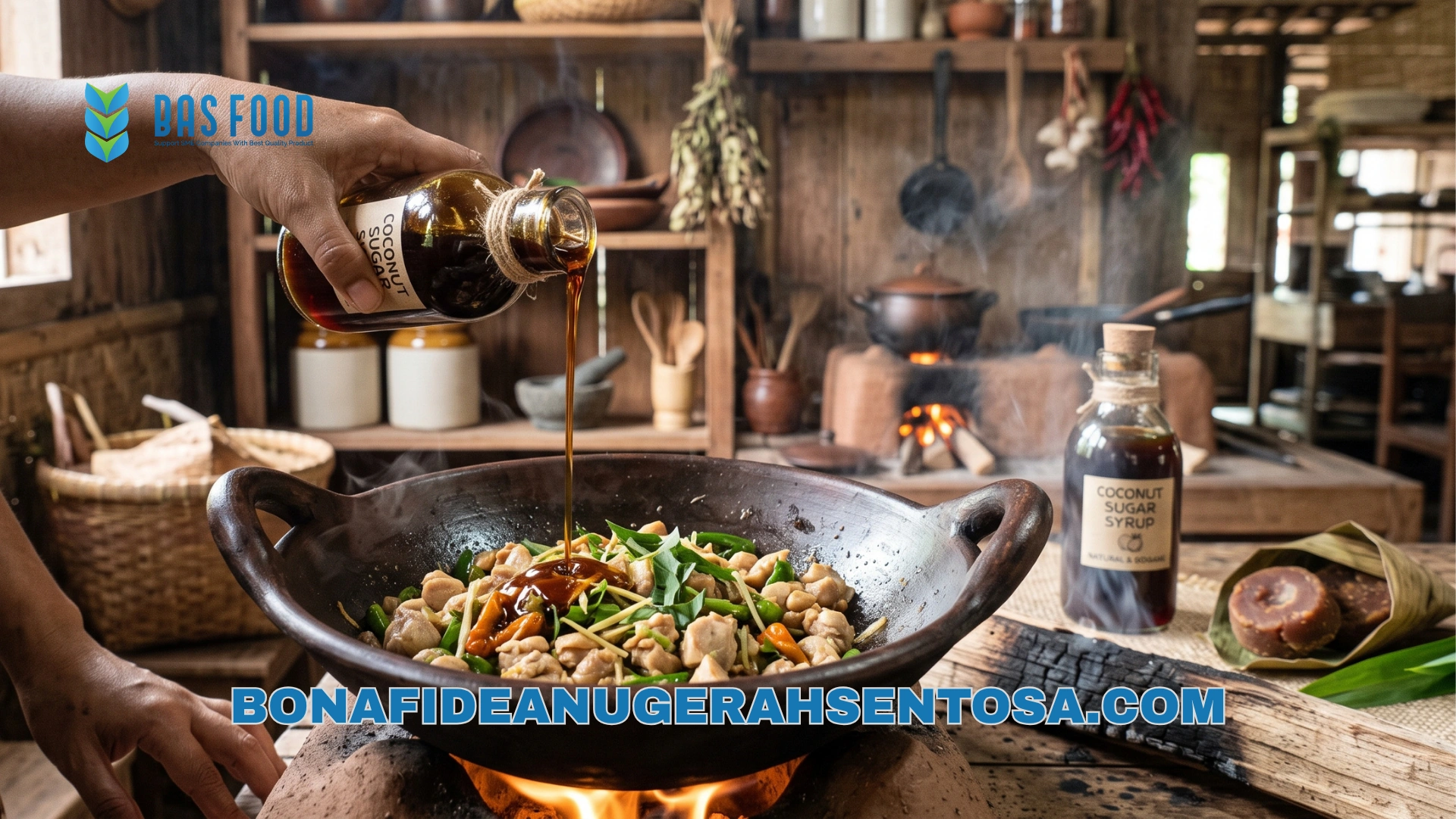
What Is Coconut Sugar Syrup?
Coconut sugar syrup is a liquid sweetener produced by concentrating coconut blossom sap. The raw sap naturally contains sugars and water. Through controlled processing, part of the water is removed until the liquid reaches the desired concentration and consistency.
The finished product usually has a brown to amber appearance, although the exact color depends on the raw material and processing conditions. Its flavor can include mild caramel, toffee, and coconut-like notes, making it useful in products where a more distinctive sweetener profile is desired.
Unlike dry coconut sugar, syrup can be added directly to formulations without first dissolving the sugar. This can be useful in beverage production, dessert sauces, toppings, bakery applications, and other food products.
Nevertheless, each manufacturer has different technical requirements. Therefore, the syrup’s viscosity, sweetness, color, moisture, and other specifications should be matched to the intended application.
The Process Starts With Fresh Coconut Sap
The foundation of coconut sugar production is fresh coconut sap. Producers collect this sap from the flower stalks of mature coconut palms. The quality of this raw material plays an important role in the final syrup.
Fresh sap is naturally rich in water and sugars. However, it is also a biological material that can change over time. Therefore, collection, handling, and processing need to be carefully coordinated.
Clean collection equipment and proper handling help reduce the risk of unwanted contamination. Producers also need to move the raw material into processing as efficiently as possible.
For an industrial ingredient, raw material consistency is important. Variations in sap quality can make it harder to maintain the same color, flavor, and concentration from one batch to another.
This is why experienced producers pay attention to the supply chain before processing even begins.
Raw Material Inspection and Preparation
Once coconut sap arrives at the processing facility, producers can inspect it before further processing. The inspection helps identify physical impurities and assess whether the raw material meets the production requirements.
The sap can then pass through a filtration or screening stage. This removes unwanted particles and prepares the liquid for the next step.
Good preparation supports the rest of the syrup processing operation. If unwanted particles remain in the raw material, they can affect the appearance or cleanliness of the finished product.
At the same time, producers need to maintain appropriate hygienic conditions during handling. Because the sap will eventually become a food ingredient, sanitation is an important part of the overall production system.
For B2B customers, understanding these early stages provides useful insight into how a supplier approaches food safety and product consistency.
Filtration: Creating a Cleaner Starting Point
Filtration is a relatively simple step, but it has an important role in coconut sugar syrup processing. The purpose is to remove unwanted physical particles from the coconut sap before concentration.
The filtration system should be appropriate for the production process and product requirements. Different facilities may use different equipment depending on their scale and processing system.
A clean starting material makes subsequent processing easier to control. It also supports the appearance and physical quality of the final syrup.
However, filtration is only one part of quality management. It does not replace proper sanitation, controlled heating, appropriate packaging, or finished-product testing.
For this reason, buyers should look at the entire production system rather than focusing on one processing step.
Controlled Heating and Concentration
After preparation, the filtered coconut sap enters the concentration stage. This is one of the most important steps in coconut sugar syrup processing.
The objective is to reduce the water content while increasing the concentration of naturally occurring sugars. As the water evaporates, the liquid becomes thicker and develops the characteristics associated with coconut sugar.
Temperature control matters during this stage. Heating that is too intense or poorly controlled can affect color and flavor. On the other hand, insufficient concentration may result in a syrup that is too thin for the intended application.
Therefore, producers need to monitor the process carefully. Time, temperature, concentration, and the desired final consistency all need to work together.
The exact processing parameters may vary depending on the equipment, raw material, and product specification. For this reason, commercial producers generally develop process controls based on their own production system rather than using one universal formula.
Developing the Desired Syrup Consistency
One of the most important characteristics of coconut sugar syrup is viscosity. Manufacturers need a syrup that can be handled easily within their production system.
A syrup that is too thick may be difficult to pump, transfer, or dose. Conversely, a syrup that is too thin may not provide the desired performance in certain food applications.
During syrup processing, producers therefore need to monitor the concentration and final consistency. The desired specification should be defined before production begins.
The ideal consistency depends heavily on the end use. Beverage manufacturers may have different requirements from sauce producers, dessert manufacturers, or bakery companies.
For this reason, B2B buyers should tell their coconut sugar supplier how they intend to use the syrup. This information can help the supplier recommend a suitable specification.
Color and Flavor Development
Coconut sugar syrup is often valued for its natural brown or amber color and characteristic sweet flavor. These properties can contribute to the sensory profile of a finished food product.
During coconut sugar production, heating and concentration can influence these characteristics. As the sap becomes more concentrated, its color and flavor can develop further.
However, manufacturers may have different preferences. A company producing a light-colored beverage may prefer a lighter syrup, while a dessert or sauce manufacturer may want a deeper color and richer flavor.
Because of this, color should be treated as a technical specification rather than simply an aesthetic feature.
Similarly, flavor consistency matters for food manufacturers. If the syrup’s flavor changes substantially between batches, it can affect the finished product.
The Importance of Quality Control
Quality control is essential throughout coconut sugar syrup processing. Manufacturers need confidence that each batch meets the agreed product specification.
Quality control can begin with raw material inspection and continue through filtration, concentration, filling, storage, and shipment.
Depending on the product requirements, testing may cover characteristics such as appearance, aroma, taste, moisture, soluble solids, viscosity, microbiological parameters, and packaging condition.
The exact tests depend on the supplier’s quality system and the buyer’s specifications. International buyers may also have additional requirements based on their market or internal food safety program.
For this reason, B2B buyers should request the relevant product specification and quality documentation before approving a supplier.
Why Batch Consistency Matters to Food Manufacturers
Imagine a beverage manufacturer develops a recipe using a specific coconut sugar syrup. The formulation works well during testing, but a later shipment has noticeably different viscosity or flavor.
That variation can create problems. The production team may need to adjust the recipe, change dosing levels, or investigate the finished product.
This is why batch-to-batch consistency is a key concern in commercial food production.
A professional coconut sugar supplier should have processes that help maintain consistent product characteristics. Clear specifications provide a reference for both the buyer and the producer.
For long-term supply relationships, manufacturers can also establish agreed specifications and quality procedures with the supplier. This creates a clearer basis for monitoring future shipments.
Packaging Coconut Sugar Syrup for Commercial Use
Once the syrup reaches the required specification, it needs to be packaged appropriately. Packaging protects the product during storage, handling, and transportation.
For B2B customers, packaging requirements can vary significantly. A large food factory may require bulk containers, while a smaller manufacturer may need smaller units.
The packaging material should be suitable for food contact and compatible with the syrup. It should also provide adequate protection during transportation.
International shipments require additional planning because the product may travel long distances and pass through multiple handling points.
Therefore, buyers should discuss packaging specifications with their supplier before confirming an export order.
Storage Considerations After Processing
Proper storage helps maintain the quality of coconut sugar syrup after production. The exact storage conditions should follow the supplier’s product specifications.
Clean storage areas, suitable temperatures, proper container closure, and protection from contamination are all important considerations.
Manufacturers should also consider how the syrup will be handled once it reaches their facility. Bulk containers need to be compatible with their storage and dosing systems.
For international buyers, the time between production and final use can be longer. Consequently, shelf life and transportation conditions become important parts of the sourcing discussion.
A reliable supplier should provide appropriate storage and handling information with the product documentation.
Applications for Processed Coconut Sugar Syrup
The versatility of coconut sugar syrup is one reason food manufacturers may consider it as an ingredient.
Common applications include:
- Beverage formulations
- Coffee and tea products
- Dessert sauces
- Ice cream products
- Bakery products
- Pancake and waffle toppings
- Snack products
- Confectionery
- Sauces and marinades
- Specialty food products
In beverages, the liquid format can make dosing convenient. Manufacturers can incorporate the syrup directly into selected formulations according to their production process.
In desserts and sauces, its color and flavor can contribute to the finished product. It may pair particularly well with ingredients such as chocolate, coffee, vanilla, cinnamon, nuts, and fruit.
However, manufacturers should test the syrup in their specific recipe. Its moisture and solids content can affect formulation balance.
Coconut Sugar Syrup for Beverage Manufacturing
Beverage production is an application where liquid sweeteners can offer practical advantages. Coconut sugar syrup can be incorporated into selected coffee, tea, ready-to-drink, and specialty beverage formulations.
Because the ingredient is already in liquid form, manufacturers may find it easier to dose and blend than dry sugar in certain production systems.
Nevertheless, product developers should evaluate factors such as viscosity, flavor, color, solubility, and interaction with other ingredients.
A clear beverage, for example, may have different requirements from a coffee-based drink. The final product specification should therefore be determined by the formulation rather than by a general assumption about coconut sugar syrup.
Pilot testing is a useful step before commercial production.
Coconut Sugar Syrup for Bakery and Dessert Products
Coconut sugar syrup can also be explored in bakery and dessert applications. It can contribute sweetness while also adding liquid, color, and flavor to the formulation.
Dessert manufacturers may use it in toppings, fillings, sauces, and specialty products. Its caramel-like character can complement chocolate, coffee, spices, vanilla, and nuts.
For bakery manufacturers, however, replacing dry sugar with syrup requires careful formulation. The syrup contains water, while dry sugar does not provide the same amount of liquid.
Therefore, product developers should consider the syrup’s solids content when calculating a formulation.
Testing at pilot scale allows manufacturers to evaluate texture, sweetness, color, moisture, and processing behavior before moving to large-scale production.
How Buyers Can Evaluate a Coconut Sugar Supplier
Choosing a supplier requires more than checking the product name and price. B2B buyers should evaluate whether the supplier can consistently meet their technical and commercial requirements.
Important factors can include:
- Product specifications
- Raw material sourcing
- Processing controls
- Quality control procedures
- Food safety documentation
- Production capacity
- Packaging options
- Minimum order quantity
- Lead time
- Export experience
- Communication and customer support
Samples can provide a practical starting point. A manufacturer’s R&D or quality team can test the syrup before approving it for commercial use.
Buyers should also explain their application to the supplier. This allows the supplier to understand the required characteristics rather than supplying a generic syrup that may not fit the intended production process.
Why Export Experience Matters
For international buyers, sourcing involves more than manufacturing. The supplier must also understand export logistics and documentation.
An experienced coconut sugar exporter supplier should be familiar with commercial orders, export packaging, documentation, shipment coordination, and communication with overseas customers.
This experience can be particularly valuable for manufacturers establishing a new international supply chain.
Supply reliability is also important. Food factories need ingredients to arrive according to their production schedules. Unexpected delays can create additional costs and disrupt manufacturing plans.
Therefore, buyers should consider export experience as part of their supplier evaluation.
Working With CV Bonafide Anugerah Sentosa
For companies looking to source coconut-based sweeteners from Indonesia, CV Bonafide Anugerah Sentosa is one supplier that international buyers can evaluate.
As an Indonesian exporter of coconut sugar and other coconut-derived products, the company can be approached by buyers interested in discussing product specifications, packaging, samples, and export requirements.
Before placing a commercial order, buyers should communicate their intended application and technical requirements. This creates a clearer basis for discussing the appropriate syrup specification.
For manufacturers planning regular purchases, it is also useful to discuss expected volumes and delivery schedules early in the relationship. This helps both sides understand the commercial requirements of a potential long-term supply arrangement.
The Future of Coconut Sugar Syrup Processing
Interest in naturally sourced sweeteners continues to create opportunities for coconut-based ingredients. Coconut sugar syrup gives food manufacturers another format that can complement traditional granules, powder, and molded coconut sugar.
At the same time, commercial demand requires consistent processing. Manufacturers need ingredients that can perform reliably from batch to batch.
This makes process control, quality management, and supplier capability increasingly important.
For Indonesian producers, the combination of local coconut resources and export experience can create opportunities in international ingredient markets. For overseas buyers, the key is to identify suppliers that can meet their technical and commercial requirements.
Final Thoughts on Coconut Sugar Syrup Processing
Coconut sugar syrup processing is a carefully managed journey that begins with coconut sap and continues through filtration, controlled concentration, quality control, packaging, and storage.
Every stage can influence the final product. Raw material quality affects the starting point, while processing conditions can influence color, flavor, viscosity, and consistency.
For food manufacturers, coconut sugar syrup can be a flexible liquid sweetener for beverages, desserts, sauces, bakery products, and other applications. However, the right specification depends on the intended use.
That is why buyers should request samples, review specifications, conduct application testing, and evaluate the supplier’s production and export capabilities before placing a large order.
For international companies exploring Indonesian coconut sugar, CV Bonafide Anugerah Sentosa can be considered as a potential coconut sugar supplier and coconut sugar exporter supplier. A direct discussion about product requirements, packaging, samples, and commercial volumes is a practical starting point for building a reliable sourcing relationship.