
Coconut sugar is often associated with granules, powder, or molded blocks. However, there is another useful form that deserves attention from food manufacturers and ingredient buyers: coconut sugar syrup. This liquid sweetener offers a smooth texture, easy handling, and a distinctive caramel-like taste that can work well in beverages, sauces, desserts, bakery products, and other food applications. Understanding coconut sugar syrup production helps buyers see how the ingredient moves from the coconut palm to a finished liquid product. The process starts with fresh coconut sap collected from coconut flower blossoms. Producers then handle, filter, heat, concentrate, and standardize the sap to create a stable syrup with the desired characteristics.
For B2B buyers, the production process matters because the quality of the raw material and each processing stage can influence the final syrup. Color, flavor, sweetness, viscosity, moisture, and shelf stability all need careful attention. Therefore, choosing an experienced coconut sugar supplier is an important step when sourcing syrup for commercial food production.
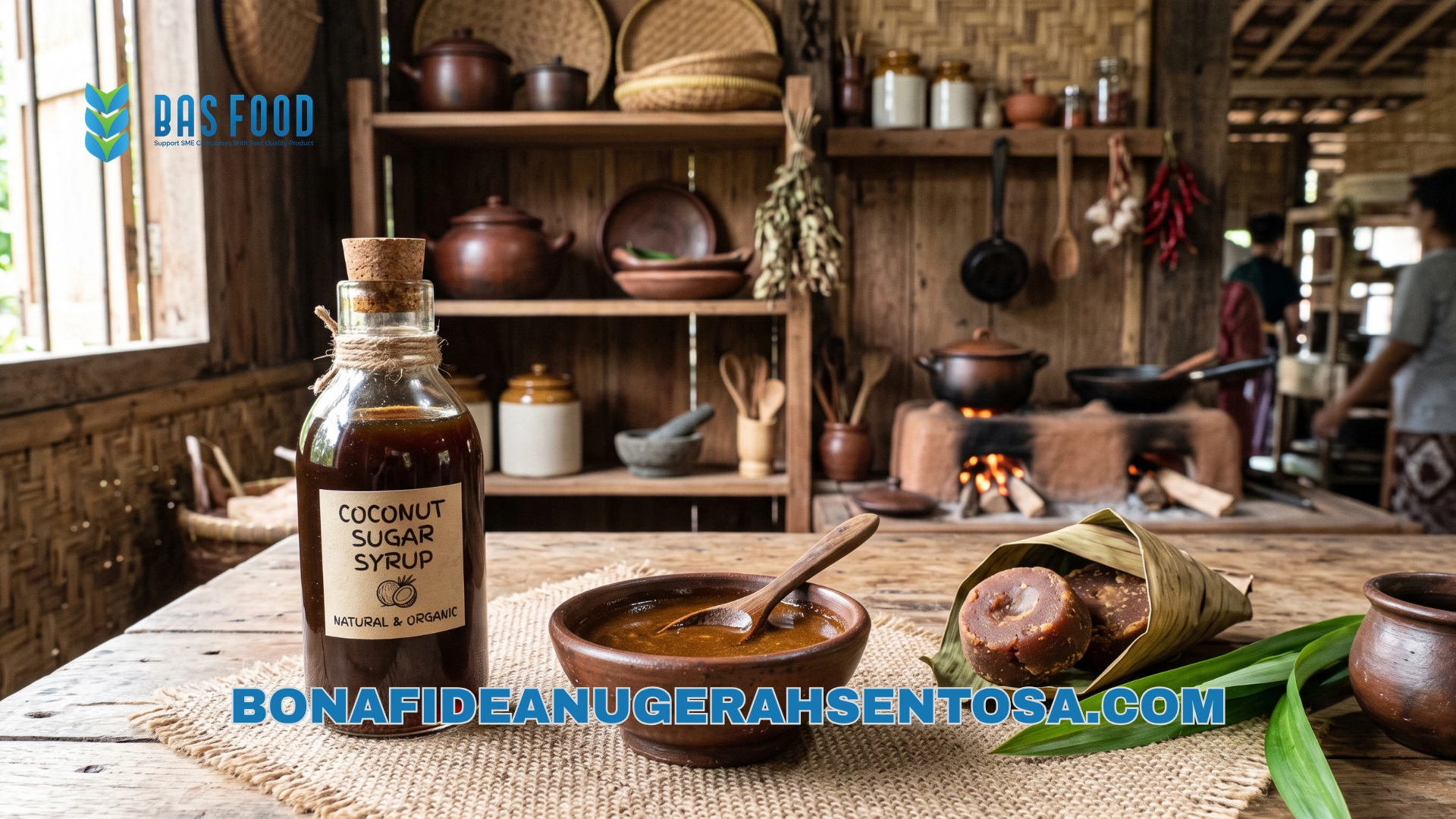
What Is Coconut Sugar Syrup?
Coconut sugar syrup is a liquid sweetener made from concentrated coconut blossom sap. Instead of continuing the concentration process until the product becomes dry sugar, producers retain controlled amounts of moisture to create a pourable syrup.
The finished syrup can vary in color and thickness depending on the raw material, heating process, concentration level, and product specification. Many products have a warm brown or amber appearance with a mild caramel-like flavor.
Unlike coconut sugar granules, syrup does not need to be dissolved before use. This makes it convenient for applications where manufacturers need a ready-to-use liquid sweetener.
Food companies may use coconut sugar syrup in beverages, sauces, dessert toppings, bakery formulations, marinades, and other products. However, the exact application depends on the syrup’s technical specifications.
For industrial buyers, it is therefore useful to discuss the intended application with the supplier before selecting a product. A syrup designed for a beverage application may require different characteristics from one intended for sauce or bakery production.
The Journey Begins With Fresh Coconut Sap
The foundation of coconut sugar syrup production is fresh coconut sap. Producers collect sap from the flower stalk of mature coconut palms. This sap contains naturally occurring sugars, water, and other components that contribute to its flavor and color.
Sap collection requires careful handling. Once collected, the raw sap can undergo natural changes if producers do not process it promptly. For that reason, collection and processing need to be properly coordinated.
The quality of the starting sap can have a direct effect on the finished syrup. Factors such as freshness, cleanliness, collection practices, and handling conditions can all influence the production process.
This is why a good production system begins long before the heating stage. Reliable sourcing from coconut farmers and consistent collection practices provide the foundation for producing a stable ingredient.
For exporters and manufacturers, traceability can also become an important consideration. Buyers may want to understand where the raw material comes from and how the supplier manages its sourcing network.
How Coconut Sap Becomes Coconut Sugar Syrup
After collection, the coconut sap needs to be prepared for processing. Producers typically inspect and filter the raw material to remove unwanted physical particles. Proper handling at this stage helps maintain the quality of the ingredient.
The next major step involves heating and concentration. During heating, water is gradually removed from the sap. As the liquid becomes more concentrated, its sugar content increases and its physical characteristics change.
Temperature control is important during this stage. Excessive or uncontrolled heating can affect color, flavor, and other characteristics. On the other hand, insufficient concentration may result in a syrup that does not meet the desired specification.
Therefore, coconut sugar processing requires a balance between concentration and quality preservation. Experienced producers monitor the process rather than relying only on a fixed processing time.
The syrup is then brought to the desired consistency according to the product specification. Depending on the intended use, manufacturers may require a particular viscosity, sweetness level, color, or moisture range.
The Role of Coconut Sugar Processing
Coconut sugar processing involves more than simply boiling coconut sap. Each stage contributes to the characteristics of the final product.
Raw material preparation, filtration, heating, concentration, and packaging all need to work together. If one stage is poorly controlled, it can affect the final syrup.
For example, inconsistent raw sap can make it harder to achieve consistent batches. Similarly, variations in heating conditions can influence the color and flavor of the syrup.
For B2B production, consistency is especially important. Food manufacturers need an ingredient that behaves predictably in their recipes. A syrup that changes significantly from one shipment to another can create problems during formulation and production.
That is why professional producers establish specifications and quality checks throughout the process. Rather than inspecting only the finished product, they monitor important points from raw material reception through final packaging.
Concentration Is the Key Production Stage
Concentration is one of the most important stages in coconut sugar syrup production. During this process, producers remove part of the water from coconut sap to increase its concentration and create the desired syrup texture.
As water evaporates, the liquid becomes thicker. The producer must control the process carefully because the final consistency needs to match the intended product specification.
Concentration also influences the syrup’s flavor and color. Controlled heating can help develop the characteristic caramel-like notes associated with coconut sugar.
However, excessive heating can cause unwanted changes. Therefore, producers need suitable equipment, process control, and experience to achieve consistent results.
For industrial buyers, this is one reason supplier experience matters. Two suppliers may start with similar coconut sap but produce noticeably different syrups because their processing methods and controls differ.
Filtration and Product Cleanliness
Filtration is another important part of liquid sweetener production. Before packaging, producers need to ensure that the syrup meets the required cleanliness and quality specifications.
During liquid sweetener production, filtration can help remove unwanted physical particles that may remain after raw material handling and processing.
The filtration method should match the product and manufacturing system. The objective is to produce a clean and consistent syrup without compromising the desired characteristics of the ingredient.
For food manufacturers, cleanliness is especially important because the syrup becomes part of another finished food product. Buyers therefore commonly request product specifications and relevant quality documentation before approving a supplier.
A clear quality-control process gives manufacturers greater confidence when incorporating the syrup into commercial formulations.
Managing Color, Flavor, and Viscosity
Coconut sugar syrup is valued partly for its sensory characteristics. Its brown or amber color and caramel-like flavor can become part of the identity of the finished food product.
However, not every manufacturer wants exactly the same characteristics. A beverage company may prefer a lighter syrup, while a dessert or sauce manufacturer may want a deeper color and stronger flavor.
Viscosity is another important specification. A syrup that is too thick may be difficult to pump or dose in certain production systems. A syrup that is too thin may not provide the desired performance in other applications.
Therefore, buyers should define their requirements before purchasing. Discussing color, viscosity, sweetness, packaging, and application with a coconut sugar supplier can help avoid misunderstandings.
Samples are particularly useful for B2B buyers. A manufacturer can test the syrup under actual production conditions before approving a larger commercial order.
Where Can Manufacturers Use Coconut Sugar Syrup?
One of the main advantages of coconut sugar syrup is its versatility. Manufacturers can incorporate it into products where a liquid sweetener fits the formulation.
Common applications include:
- Beverages
- Coffee and tea products
- Dessert sauces
- Ice cream and frozen desserts
- Bakery products
- Pancake and waffle toppings
- Confectionery
- Snack products
- Marinades
- Sauces and dressings
- Foodservice products
- Specialty food formulations
In beverages, the syrup can provide sweetness without requiring the manufacturer to dissolve dry sugar separately. This can be useful in certain beverage manufacturing systems.
In sauces and desserts, its flavor can complement ingredients such as cocoa, vanilla, spices, coffee, nuts, and fruit.
Bakery manufacturers can also explore the ingredient in selected recipes. However, because a liquid sweetener adds moisture as well as sweetness, recipe adjustments may be necessary.
The right formulation therefore depends on the final product and production process.
Coconut Sugar Syrup for Beverage Production
Beverage manufacturers are an important potential market for liquid sweeteners. Coconut sugar syrup can be used in selected ready-to-drink beverages, coffee products, tea products, concentrates, and other formulations.
Its liquid form can simplify certain dosing and mixing operations. Instead of handling dry sugar, manufacturers can pump or measure the syrup according to their production system.
However, manufacturers should evaluate factors such as dissolution, viscosity, flavor intensity, color contribution, and compatibility with other ingredients.
For example, a light-colored beverage may require a different syrup specification from a dark coffee beverage. Similarly, a product intended for cold consumption may have different mixing requirements from a hot beverage.
Therefore, product development teams should conduct application trials before moving to full-scale production.
Coconut Sugar Syrup for Bakery and Dessert Products
Although coconut sugar is commonly associated with dry forms, syrup can also have a place in bakery and dessert applications. It can contribute sweetness, moisture, color, and flavor depending on the formulation.
Dessert manufacturers may use coconut sugar syrup in toppings, fillings, sauces, or specialty dessert products. Its caramel-like notes can pair well with chocolate, coffee, vanilla, cinnamon, and nuts.
In bakery formulations, however, manufacturers need to account for the additional liquid. A recipe developed for dry sugar may not work correctly if the same quantity is replaced with syrup.
For that reason, product developers should evaluate the syrup based on its solids content and moisture contribution rather than simply replacing dry sugar by weight.
This technical approach can help manufacturers achieve more consistent results.
Quality Control During Liquid Sweetener Production
Quality control should be integrated throughout liquid sweetener production. A professional producer does not wait until the final packaging stage to check whether the product meets requirements.
Raw material inspection, filtration, concentration control, and finished-product testing can all contribute to consistent quality.
Depending on the product specification, buyers may evaluate parameters such as appearance, aroma, taste, moisture, soluble solids, viscosity, microbiological quality, and packaging integrity.
The exact requirements can vary according to the buyer’s market and intended application. Therefore, manufacturers should provide their technical specifications when requesting quotations or samples.
Clear specifications also help suppliers understand what the buyer actually needs. This reduces the chance of receiving a product that is technically coconut sugar syrup but unsuitable for the buyer’s manufacturing process.
Packaging and Storage Considerations
Packaging is an important part of the finished product. Because coconut sugar syrup is a liquid, packaging must be suitable for food use and strong enough for transportation and storage.
B2B buyers may have different packaging requirements depending on their production volume. Some manufacturers may prefer bulk containers for factory use, while others may require smaller packaging for repacking or foodservice applications.
The packaging should protect the syrup from contamination and damage during transportation. International shipments require additional attention because the product may travel through several stages before reaching the buyer’s facility.
Storage conditions should also follow the supplier’s recommendations. Temperature, humidity, container closure, and handling practices can all influence product quality.
For international buyers, it is useful to discuss packaging specifications with the coconut sugar exporter supplier before confirming an order.
Why Supplier Selection Matters for Export Buyers
Buying coconut sugar syrup internationally involves more than comparing prices. The supplier must be able to provide consistent product quality while also handling export requirements.
An experienced coconut sugar exporter supplier should understand the needs of overseas buyers, including product specifications, packaging, documentation, shipment preparation, and communication.
Supply consistency is particularly important for manufacturers. If a factory uses coconut sugar syrup as a regular ingredient, an unexpected change in color, viscosity, or flavor can affect its finished products.
For this reason, buyers should evaluate suppliers based on several factors, including product quality, capacity, documentation, communication, packaging, and delivery performance.
Samples and trial orders can provide a practical way to evaluate whether the product fits the manufacturer’s needs before establishing a larger supply program.
Working With an Indonesian Coconut Sugar Supplier
Indonesia has a long history of coconut cultivation and coconut-based food production. This provides an established agricultural foundation for coconut-derived ingredients.
For overseas manufacturers, sourcing from an Indonesian coconut sugar supplier can provide access to coconut-based sweeteners produced close to the raw material source.
However, buyers should still evaluate each supplier individually. Production methods, specifications, capacity, quality systems, and export experience can differ between companies.
CV Bonafide Anugerah Sentosa is an Indonesian exporter that supplies coconut sugar and other coconut-derived products to international markets. For buyers exploring Indonesian coconut sugar syrup, the company can be approached to discuss product specifications, applications, packaging, samples, and export requirements.
Starting with a clear product specification is usually the most practical approach. It allows both buyer and supplier to determine whether the available syrup matches the intended application.
From Small-Batch Testing to Commercial Production
A practical sourcing process usually begins with product samples. The manufacturer’s R&D team can test the syrup in a specific formulation and identify any adjustments that may be needed.
Once the sample passes the initial evaluation, the buyer can move to a larger trial. This stage helps confirm how the syrup performs under actual manufacturing conditions.
After successful trials, the buyer and supplier can agree on commercial specifications. These may cover product parameters, packaging, order volume, delivery schedule, and required documentation.
This step-by-step approach reduces unnecessary risk. It also gives both parties a clear understanding of what will be supplied and what the manufacturer expects.
For long-term supply, buyers should continue monitoring incoming batches to ensure that the product remains within the agreed specification.
The Future of Coconut Sugar Syrup Production
The demand for naturally positioned sweeteners continues to create opportunities for coconut-based ingredients. Coconut sugar syrup offers manufacturers another format beyond granules, powder, and blocks.
Its liquid format can be particularly useful in food applications where manufacturers want a ready-to-dose sweetener. At the same time, its characteristic flavor and color can provide additional product differentiation.
Future opportunities will depend on the ability of producers to combine traditional raw material knowledge with consistent food processing and quality management.
For exporters, this means building reliable supply systems from coconut farmers through processing, packaging, and international logistics.
For food manufacturers, it means selecting suppliers that can provide not only a product but also dependable technical information and commercial support.
Final Thoughts on Coconut Sugar Syrup Production
Coconut sugar syrup production starts with fresh coconut sap and continues through careful filtration, heating, concentration, quality control, and packaging. Each stage can influence the final characteristics of the syrup.
For manufacturers, the ingredient can offer a practical liquid sweetener option for beverages, desserts, sauces, bakery products, and other food applications. Nevertheless, its suitability depends on the formulation and technical requirements of the finished product.
That is why product samples, specifications, and application trials are important before commercial purchasing. A reliable coconut sugar supplier should be able to discuss these requirements clearly.
For international buyers interested in Indonesian coconut-based sweeteners, CV Bonafide Anugerah Sentosa can be a potential sourcing partner to evaluate. By discussing specifications, packaging, samples, and export requirements in advance, manufacturers can build a clearer path from ingredient sourcing to finished-product production.
Ultimately, successful coconut sugar syrup sourcing begins with understanding the ingredient, knowing what your production line requires, and working with a supplier capable of delivering consistent specifications at commercial scale.