
When buyers look for a natural liquid sweetener, they often want something that is easy to use, easy to process, and suitable for different food and beverage applications. This is where coconut sugar syrup becomes an interesting option for manufacturers, foodservice businesses, beverage companies, and ingredient distributors. Made from coconut palm sap, coconut sugar syrup offers a liquid format that can be easier to blend into many formulations than solid or granulated sugar. Depending on the production process and supplier specification, it can be used in beverages, sauces, desserts, bakery products, toppings, and other food applications.
For B2B buyers, however, purchasing coconut sugar syrup involves more than simply comparing prices. Buyers should understand the product format, consistency, packaging, quality parameters, application requirements, and supplier capabilities before placing a bulk order.
This guide explains what buyers should know about coconut sugar syrup and how to evaluate a reliable coconut sugar exporter supplier for international sourcing.
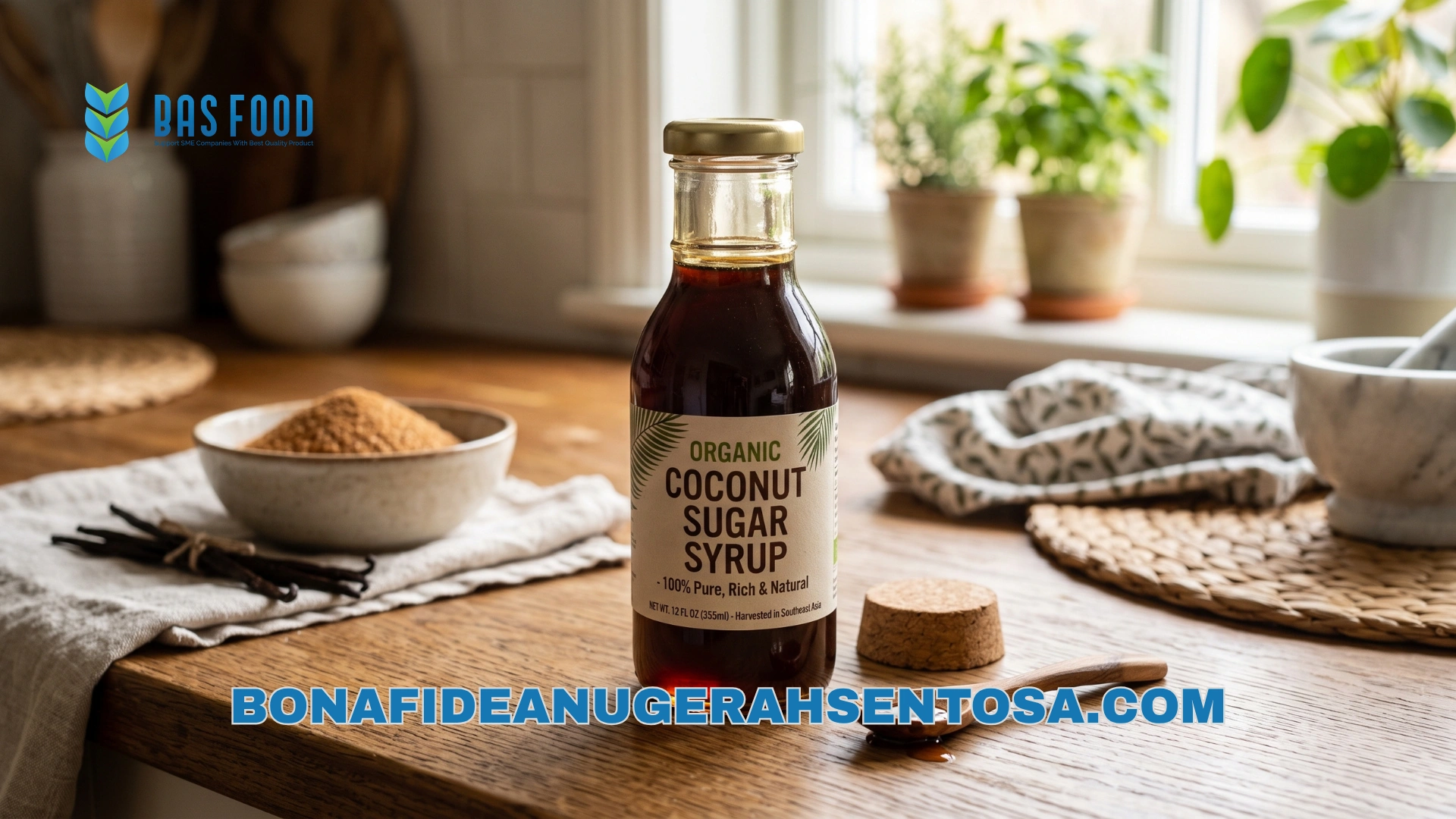
What Is Coconut Sugar Syrup?
Coconut sugar syrup is a liquid sweetener produced from coconut palm sap. Instead of processing the sap into solid coconut sugar or granules, producers process it into a pourable liquid product. The result is a sweet ingredient that can be incorporated into food and beverage formulations without first dissolving a solid sugar.
The term can also appear in the market as liquid coconut sugar, coconut sugar liquid, or coconut syrup sweetener. While these terms may be used interchangeably in commercial discussions, buyers should still check the supplier’s exact product specification because production methods, concentration, viscosity, color, and other characteristics can differ.
The basic raw material comes from coconut palms. Farmers collect the sap, and the sap then goes through controlled processing to create the desired liquid sweetener. The processing conditions influence the final product’s appearance, aroma, flavor, and consistency.
For this reason, B2B buyers should not evaluate coconut sugar syrup only by its name. A technical specification sheet is important because it provides a clearer picture of what the product can offer and whether it fits the buyer’s manufacturing process.
Why Are More Food Businesses Interested in Liquid Coconut Sugar?
One of the biggest advantages of liquid coconut sugar is its convenient format. Granulated or block sugar may need to dissolve before it can be evenly distributed in certain products. A liquid ingredient, on the other hand, can often be added directly during formulation.
This can be useful for beverage manufacturers, sauce producers, dessert companies, bakeries, and foodservice operators. For example, a beverage producer may find a liquid sweetener easier to blend into a drink base, while a sauce manufacturer can incorporate it during mixing.
Another consideration is product positioning. Some brands are looking for sweeteners that offer a distinctive ingredient story. Coconut-based ingredients can provide an alternative to conventional refined sweeteners and may fit product concepts focused on natural or plant-based ingredients.
However, B2B buyers should avoid assuming that every coconut sugar syrup has the same characteristics. A product’s performance depends on its formulation and processing. Therefore, application testing remains important before moving from samples to commercial quantities.
How Is Coconut Sugar Syrup Made?
The production process starts with coconut palm sap. Farmers collect the sap from coconut flower stems using established harvesting practices. Because the raw sap is sensitive to changes in handling and storage, proper management after collection is important.
After collection, producers process the sap under controlled conditions. Depending on the product specification, the liquid may be heated and concentrated to achieve the desired consistency. The processing stage also affects the color, flavor, aroma, and viscosity of the finished coconut sugar liquid.
Quality control is important throughout this process. Raw material handling, processing temperature, concentration, hygiene, and packaging can all influence the finished product. Therefore, a reliable supplier should have a consistent production system rather than depending entirely on individual production batches.
For international buyers, this consistency matters even more. A food manufacturer may need the same ingredient characteristics across multiple shipments. If the syrup changes significantly from one batch to another, the buyer may experience problems with product formulation, taste, appearance, or processing.
Key Quality Parameters Buyers Should Check
Before purchasing coconut sugar syrup, buyers should identify the quality parameters that matter for their specific application. There is no single specification that works for every product because different industries can have different requirements.
One important factor is consistency or viscosity. A buyer using the syrup in beverages may need a different consistency from a manufacturer using it in sauces or dessert toppings. Therefore, the supplier should provide product information that helps the buyer understand how the syrup behaves during processing.
Color is another useful parameter. Coconut sugar syrup can have a characteristic brown to dark brown appearance, depending on the raw material and processing conditions. Buyers should establish an acceptable color range if appearance is important to their final product.
Flavor and aroma should also be considered. Coconut sugar syrup can provide a characteristic sweet profile with caramel-like notes, although the exact sensory profile depends on the product and processing method. A sample evaluation allows buyers to determine whether the flavor matches their formulation.
Other quality checks may include moisture or solids content, pH where relevant, microbiological parameters, cleanliness, foreign matter, and shelf-life requirements. These specifications should be agreed with the supplier according to the intended application and destination market.
Coconut Sugar Syrup vs. Granulated Coconut Sugar
Both liquid and granulated coconut sugar can serve as sweetening ingredients, but their physical formats create different advantages. Granulated coconut sugar is generally convenient for dry mixes, baking ingredients, retail packs, and applications where a dry sweetener is preferred.
Coconut sugar syrup, meanwhile, offers a ready-to-use liquid format. It can be especially practical when a formulation already contains liquid ingredients. Instead of waiting for solid sugar to dissolve, manufacturers can incorporate the syrup during the mixing process.
The right choice depends on the buyer’s production system. A bakery producing dry premixes may prefer granules, while a beverage manufacturer or sauce producer may prefer a liquid format.
Cost should also be evaluated carefully. Buyers should compare products based on usable sweetener content, packaging, shipping weight, storage requirements, and production performance rather than looking only at the price per kilogram.
Common Applications of Coconut Sugar Syrup
The versatility of coconut syrup sweetener makes it suitable for several food and beverage applications. Nevertheless, the exact suitability depends on the supplier’s specification and the formulation requirements of the finished product.
Beverages
One of the most obvious applications is beverages. Coconut sugar syrup can be used in drink formulations where a liquid sweetener is easier to mix than a solid ingredient.
It may be considered for coffee drinks, tea beverages, smoothies, flavored drinks, functional beverage concepts, and other liquid formulations. Beverage manufacturers should test the syrup for sweetness, flavor contribution, color, solubility, and stability within the finished recipe.
Bakery and Desserts
Liquid coconut sugar can also be used in selected bakery and dessert formulations. It may contribute sweetness, color, and a distinctive flavor profile.
However, replacing a dry sugar with a liquid ingredient changes the formulation’s overall liquid balance. Bakers and food manufacturers therefore need to adjust recipes based on the syrup’s concentration and characteristics.
Sauces and Toppings
Sauces, dessert toppings, glazes, and similar products can also benefit from a liquid sweetening ingredient. The syrup can be incorporated during mixing and may contribute both sweetness and color.
For commercial production, manufacturers should test viscosity and stability because the syrup can affect the final texture of the product.
Foodservice
Foodservice businesses may also use coconut sugar syrup as a convenient sweetener for beverages, desserts, pancakes, waffles, sauces, or specialty menu items.
The liquid format can be particularly practical for operations that need quick portioning and simple handling. However, packaging size should match the business’s consumption rate to reduce unnecessary storage and handling.
Why Particle Size Is Not the Main Issue With Coconut Sugar Syrup
When buying granulated coconut sugar, buyers often discuss particle size, mesh, or granule distribution. Those specifications are important for dry sugar products. However, they are not the primary quality concern for a liquid product.
With coconut sugar liquid, buyers should instead focus on characteristics such as viscosity, solids content, color, flavor, pH where applicable, microbiological quality, packaging, and shelf life.
This distinction is important when comparing different product formats. A buyer who normally purchases coconut sugar granules should not simply transfer the same specification requirements to syrup.
Instead, buyers should start with their application. Ask what the ingredient needs to do in the finished product, then work backward to the appropriate technical specification.
Packaging Considerations for B2B Buyers
Packaging plays an important role when purchasing coconut sugar syrup internationally. Because the product is liquid, packaging needs to protect it during storage, handling, transportation, and distribution.
The appropriate packaging format depends on order volume, destination, warehouse conditions, customer requirements, and the supplier’s available options. B2B buyers may request different formats for food manufacturing, foodservice, distribution, or retail applications.
For export orders, buyers should discuss packaging specifications with the supplier before confirming the purchase. Important points include container material, packaging size, sealing, labeling, palletization where applicable, and outer protection.
Export packaging should also be considered together with logistics. Liquid products can have different transportation and handling requirements from dry coconut sugar. Therefore, packaging and shipping should be planned as part of the complete sourcing process.
How to Evaluate a Coconut Sugar Supplier
Choosing a coconut sugar supplier requires more than finding the lowest quotation. A good supplier should be able to explain the product clearly and provide the information required for commercial evaluation.
Start by asking for a product specification sheet. This document should explain the important characteristics of the coconut sugar syrup and help you determine whether the ingredient fits your application.
Next, request a sample. Product samples allow buyers to evaluate the syrup before committing to a larger order. Test the sample under actual or representative production conditions whenever possible.
It is also useful to ask about production capacity, packaging options, lead time, quality control, export experience, documentation, and communication procedures. These factors can have a significant impact on long-term supply reliability.
For B2B buyers, supplier communication is especially important. A supplier that can respond clearly to technical and commercial questions can make the sourcing process much easier.
Working With an Indonesian Coconut Sugar Exporter Supplier
Indonesia is an important source of coconut-based products because of its coconut-growing regions and established agricultural communities. Buyers looking for Indonesian ingredients can consider working directly with an Indonesian coconut sugar exporter supplier.
Direct sourcing can provide buyers with closer communication about product specifications, packaging, samples, and export requirements. However, buyers should still conduct proper supplier evaluation before starting a commercial relationship.
For example, buyers can compare samples from several suppliers, review technical documents, discuss production capabilities, and confirm packaging requirements. This approach helps reduce the risk of selecting a supplier based only on a website description or quotation.
The same principle applies whether the buyer is a food manufacturer, distributor, importer, restaurant supplier, or private-label brand. The supplier should be able to match the product with the buyer’s actual business requirements.
CV Bonafide Anugerah Sentosa as a Coconut Sugar Supply Partner
CV Bonafide Anugerah Sentosa is an Indonesian supplier and exporter of coconut-based products. For B2B buyers exploring coconut sugar products, working with a supplier that understands both product requirements and export processes can simplify international sourcing.
When discussing coconut sugar syrup, buyers can communicate their intended application and required specifications directly with the supplier. This can help determine the most suitable product characteristics, packaging format, and commercial arrangement.
As with any ingredient purchase, buyers should evaluate samples and specifications before placing a larger order. Requirements can vary between markets and applications, so clear communication remains an important part of the sourcing process.
For buyers comparing a liquid product with granulated or moulded coconut sugar, it can also be useful to discuss the complete product range with the supplier. This allows manufacturers to select the format that best matches their production process.
Questions to Ask Before Ordering Coconut Sugar Syrup
Before moving forward with a supplier, B2B buyers should prepare a simple checklist. Asking the right questions early can prevent misunderstandings later.
First, confirm the product specification. Ask about consistency, solids content, color, flavor, shelf life, microbiological parameters, packaging, and storage conditions where applicable.
Next, clarify commercial details. Ask about available packaging sizes, minimum order requirements, production lead time, sample availability, payment terms, shipping arrangements, and export documentation.
Most importantly, explain your intended application. A supplier can provide more useful information when it understands whether you plan to use the ingredient in beverages, bakery products, sauces, foodservice, retail, or another application.
Final Thoughts: Is Coconut Sugar Syrup Right for Your Business?
Coconut sugar syrup provides B2B buyers with a practical liquid format for applications where direct incorporation and easy mixing are useful. It can be considered for beverages, bakery products, desserts, sauces, toppings, and foodservice applications.
However, the right product depends on the formulation. Buyers should look beyond the product name and evaluate the actual specification, sensory characteristics, consistency, packaging, shelf life, and quality requirements.
For importers, distributors, and food manufacturers, choosing the right coconut sugar supplier is equally important. A reliable partner should be able to provide samples, product information, consistent communication, and export support.
Whether you need liquid coconut sugar, granulated coconut sugar, or moulded formats, start with your application and technical requirements. Then work with a supplier that can provide a product suitable for your business.