
Coconut sugar has been part of traditional food culture in Indonesia for generations. Long before modern food factories started looking for alternative sweeteners, local producers were already collecting coconut flower sap and turning it into a useful cooking ingredient. Today, that same ingredient has found a place in international food supply chains. One of the most recognizable forms is moulded coconut sugar. Instead of turning the concentrated sugar into granules or powder, producers shape it into blocks, discs, rounds, or other forms. This process is commonly known as coconut sugar moulding.
For international buyers, however, moulding is more than simply putting warm sugar into a mould. The process can influence shape, texture, moisture, handling, packaging, and final product consistency. Therefore, buyers who source moulded coconut sugar should understand how the process works and what factors affect the finished product.
This guide explores coconut sugar moulding from raw material preparation to finished products. It also explains the role of moulded coconut sugar in modern food supply chains and what B2B buyers should consider when choosing a coconut sugar supplier.
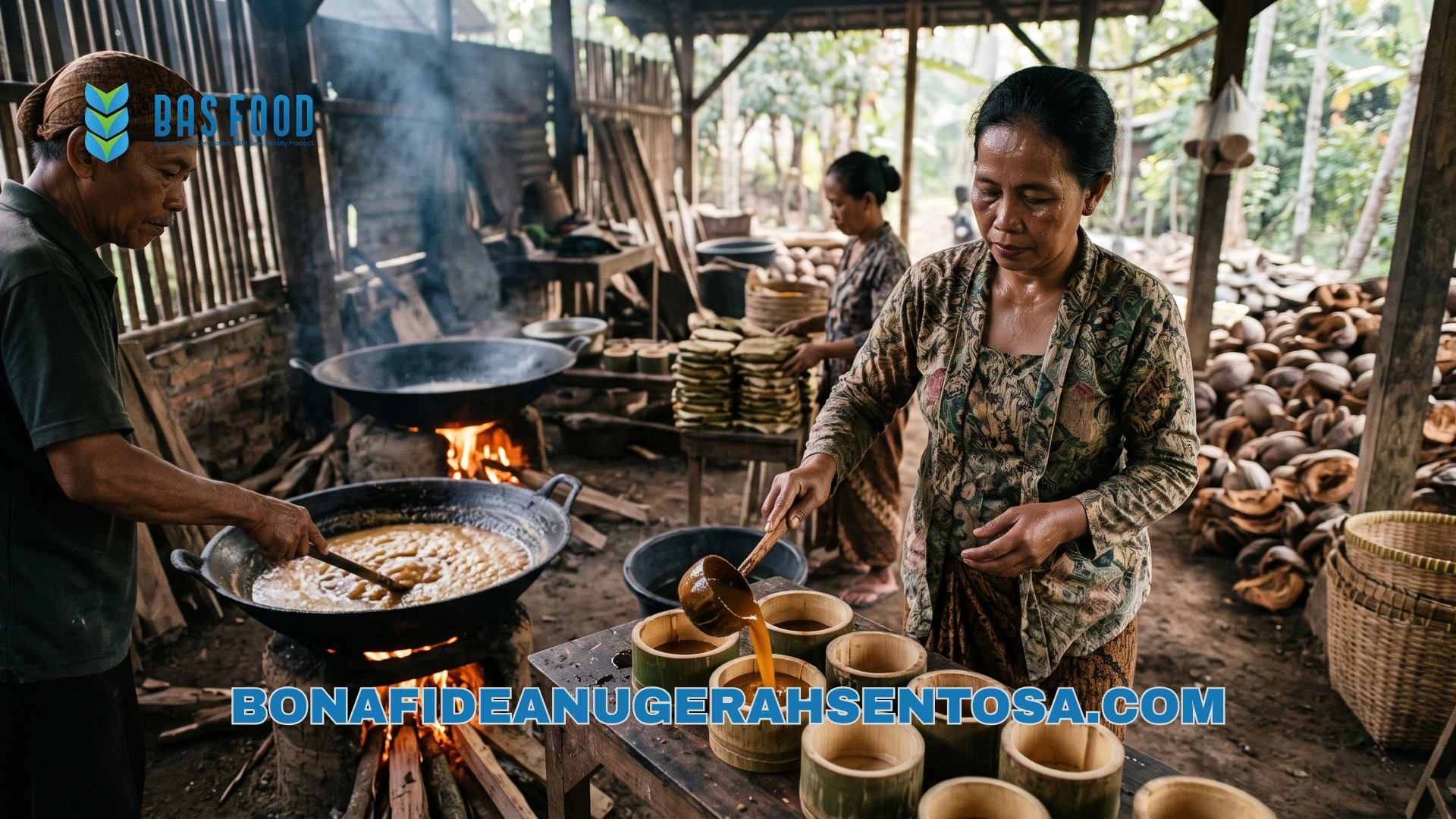
What Is Coconut Sugar Moulding?
Coconut sugar moulding is the process of shaping concentrated coconut sugar into a specific physical form. Depending on the market and production system, the sugar can be formed into blocks, discs, small rounds, or other shapes.
The process begins with coconut sap collected from the flower stalk of coconut trees. Producers heat the sap to reduce its water content and concentrate the naturally occurring sugars. Once the material reaches the appropriate stage, producers cool and work the concentrated sugar before transferring it into moulds.
The mould gives the product its final shape. After the sugar sets, producers remove the pieces from the mould and prepare them for further handling, storage, or packaging.
Although the basic idea sounds simple, consistent moulding requires careful control. Temperature, concentration, handling, mould design, and cooling can all influence the final result.
From Coconut Sap to Coconut Sugar
The first stage of coconut sugar production begins with coconut sap. Farmers collect sap from coconut flower stalks using traditional tapping methods. The quality and freshness of the sap can influence the processing stage.
Once collected, the sap needs proper handling before it reaches the cooking stage. Producers typically filter the raw sap to remove unwanted physical material. They then heat it to reduce its water content.
As heating continues, the liquid becomes increasingly concentrated. The producer must monitor the process carefully because excessive heating or poor control can affect color, aroma, texture, and other product characteristics.
For this reason, experienced producers play an important role in maintaining product quality.
Why Moulding Requires Careful Process Control
The consistency of the concentrated sugar matters greatly during moulding.
If the material is too fluid, it may not hold the desired shape effectively. On the other hand, if it becomes too firm before moulding, workers may find it difficult to distribute the sugar evenly inside the mould.
Therefore, producers need to work within an appropriate processing window.
This is one reason why traditional knowledge remains valuable in coconut sugar moulding. Experienced producers can recognize changes in texture and behavior during the process.
At commercial scale, however, traditional experience should work alongside appropriate production controls. The goal is to preserve the characteristics associated with traditional coconut sugar while achieving a consistent product suitable for B2B requirements.
The Role of Temperature in Moulding
Temperature plays an important role in shaping coconut sugar.
The concentrated sugar needs to reach a workable condition before it enters the mould. If the material changes temperature too quickly or remains hot for too long, the final texture and shape may differ.
During cooling, the sugar gradually becomes more solid. The timing of mould removal therefore matters because the pieces need enough structure to maintain their form.
A professional producer monitors the process carefully rather than treating moulding as a single simple step.
For B2B buyers, this matters because consistent processing can contribute to more uniform product appearance across batches.
Traditional Coconut Sugar and Modern B2B Demand
Traditional coconut sugar has a strong connection to local agriculture and culinary traditions.
In Indonesia, coconut sugar has historically been produced by smallholder farmers and local processors. The methods may vary between regions, but the basic process connects the final product directly to coconut cultivation.
Today, international food companies increasingly look for ingredients with a recognizable origin and story.
Moulded coconut sugar can fit this demand because its physical form reflects a traditional way of preparing and selling the ingredient.
However, international trade also requires additional attention to consistency, hygiene, packaging, documentation, and supply planning.
Common Shapes of Moulded Coconut Sugar
One advantage of moulding is flexibility.
Coconut sugar can be shaped into different formats depending on the target market and customer requirements. Common formats include blocks, discs, rounds, and smaller pieces.
Traditional blocks are familiar in many Asian markets and can be convenient for household cooking.
Smaller moulded pieces can also be useful for foodservice or retail applications where portion size matters.
The appropriate shape depends on the intended use.
A food manufacturer may require one format for recipe development, while a retail brand may prefer another shape because of packaging and consumer expectations.
Why Shape Matters in Commercial Products
Shape is not only an aesthetic issue.
It can influence how the product is packed, transported, stored, displayed, and eventually used by consumers or food manufacturers.
For example, uniform blocks can make bulk packing easier. Consistent dimensions may also help distributors estimate the number of pieces per carton.
Similarly, retail products may require specific shapes to fit the packaging design.
Therefore, B2B buyers should communicate their desired dimensions and weight clearly when discussing moulded coconut sugar with a supplier.
Mould Design and Product Consistency
The mould itself has an important role in coconut sugar moulding.
A consistent mould helps producers create pieces with similar dimensions. However, moulding alone cannot guarantee perfect uniformity because the characteristics of the concentrated sugar and production conditions also influence the final result.
The mould material, shape, size, and handling method should be suitable for food production.
For buyers who need customized shapes, the discussion should include technical specifications before production begins.
A buyer should provide details such as target weight, dimensions, shape, and packaging requirements.
Moulded Coconut Sugar vs Granulated Coconut Sugar
Moulded coconut sugar and granulated coconut sugar serve different purposes.
Moulded products are often associated with traditional culinary use. Consumers can break, grate, slice, or dissolve the sugar depending on the recipe.
Granulated coconut sugar, meanwhile, is easier to weigh and blend directly into many industrial formulations.
For example, food manufacturers may prefer granules for bakery mixes, beverages, snacks, chocolate, or other processed foods.
Therefore, the choice depends on the application rather than one format being universally better.
When Should Buyers Choose Moulded Coconut Sugar?
Moulded coconut sugar can be suitable for businesses selling traditional food products or ingredients.
It can also work well for retail products where the physical shape adds value to the consumer experience.
Restaurants, foodservice businesses, traditional-food producers, and specialty ingredient distributors may also find moulded formats useful.
However, buyers should consider how the product will be used before selecting the format.
If the ingredient needs to enter an automated mixing process, granulated coconut sugar may be more practical.
If the product is intended for traditional cooking or retail presentation, moulded coconut sugar may provide a better fit.
Quality Factors to Check Before Buying
When purchasing moulded coconut sugar, buyers should look beyond appearance.
Important quality considerations may include color, aroma, taste, texture, moisture, shape, weight, cleanliness, and packaging.
The acceptable range depends on the buyer’s market and product application.
For example, a retail brand may have strict requirements for shape and appearance, while an industrial food processor may focus more heavily on composition and processing performance.
The buyer and supplier should agree on specifications before production.
Moisture and Texture
Moisture can affect the texture and storage performance of coconut sugar.
A product with excessive moisture may become softer or stickier than expected. Environmental humidity can also influence the product during storage and transportation.
Therefore, packaging and storage conditions matter.
Buyers should ask the supplier about recommended storage conditions and packaging materials. They should also consider the climate of the destination market.
This is particularly relevant for international shipments that may spend significant time in warehouses or containers.
Packaging Moulded Coconut Sugar for Export
Export packaging needs to protect the product throughout transportation.
Moulded pieces can rub against one another during handling, so suitable inner and outer packaging can help reduce physical damage.
Packaging should also provide protection from moisture and contamination.
For B2B orders, packaging can be designed around the buyer’s distribution system.
Some customers may require bulk industrial packaging, while others may need smaller packs suitable for retail distribution.
The final packaging specification should therefore be discussed before production.
Why Batch Consistency Matters
Imagine ordering 10 tonnes of moulded coconut sugar and receiving pieces that vary widely in size and weight.
That variation can create problems for packaging, inventory counting, product presentation, and customer expectations.
This is why batch consistency is important.
A capable coconut sugar supplier should have clear production procedures and quality checks designed to reduce unnecessary variation.
For long-term buyers, consistency across shipments can be more valuable than a low price on a single order.
Choosing a Coconut Sugar Supplier
Selecting a coconut sugar supplier should involve more than comparing quotations.
Buyers should evaluate the supplier’s production capability, raw material sourcing, quality management, packaging, communication, and ability to support repeat orders.
It is also useful to request product samples before making a large purchase.
Samples allow buyers to assess the actual product rather than relying only on photographs or descriptions.
For international buyers, documentation and export experience should also be considered.
Working With a Coconut Sugar Mould Supplier
A coconut sugar mould supplier may be relevant when a buyer requires a particular shape or customized format.
Before ordering customized moulds, the buyer should define the product’s dimensions, target weight, shape, and intended packaging.
The supplier can then determine whether the requested format is practical for production.
Customization may be especially useful for private-label brands that want a distinctive product format.
However, customized production should always be evaluated in relation to MOQ, production time, packaging, and total cost.
The Importance of Raw Material Quality
Good moulding begins with good raw material.
Coconut sap is an agricultural raw material, so its characteristics can vary depending on harvesting conditions, handling, and processing.
Fresh and properly handled sap provides a stronger foundation for producing consistent coconut sugar.
For this reason, supplier relationships with farmers and raw material producers matter.
A supplier that understands the entire supply chain can better manage the transition from coconut sap to finished sugar.
Traditional Knowledge Still Has Value
Modern production does not necessarily mean replacing traditional methods completely.
Many aspects of coconut sugar production depend on practical knowledge developed over generations.
Producers learn how to recognize changes in sap, concentration, aroma, color, and texture.
This knowledge can support the production process.
At the same time, commercial buyers require documentation, consistency, hygiene controls, and repeatability.
The strongest supply chains can combine traditional knowledge with modern quality management.
Coconut Sugar Moulding for International Markets
International buyers often have different expectations from domestic consumers.
Importers may require specific packaging, labeling, documentation, product specifications, and shipment quantities.
Therefore, a supplier serving international markets needs to understand more than production alone.
Export preparation includes coordinating production schedules, packaging, documentation, logistics, and communication with buyers.
A supplier that can manage these areas can become a more dependable long-term partner.
How CV Bonafide Anugerah Sentosa Fits Into the Supply Chain
CV Bonafide Anugerah Sentosa is an Indonesian exporter that can be considered by buyers looking for coconut sugar and related products.
For buyers interested in moulded coconut sugar, discussions should focus on the required shape, weight, specifications, packaging, MOQ, production capacity, lead time, and export documentation.
If a buyer needs a specific moulded format, it is important to communicate the technical requirements clearly before production.
Current product availability and specifications should always be confirmed directly with the supplier before placing a commercial order.
Conclusion: Keeping Tradition in Shape
Coconut sugar moulding is a simple idea with a surprisingly important role in the coconut sugar supply chain.
The process transforms concentrated coconut sap into recognizable shapes that can be used in traditional cooking, foodservice, retail, and specialty food markets.
However, producing a good moulded product requires attention at every stage. Raw material quality, cooking, concentration, temperature, mould design, cooling, packaging, storage, and quality control can all influence the final result.
For B2B buyers, the right approach is to define requirements clearly and evaluate suppliers carefully.
If you need moulded coconut sugar, discuss the required shape, weight, texture, packaging, MOQ, and delivery schedule with your chosen coconut sugar supplier. If you need customized shapes, a coconut sugar mould supplier can also help determine the practical production options.
For buyers considering CV Bonafide Anugerah Sentosa, direct communication is the best way to confirm current product specifications, available moulded formats, production capacity, packaging, documentation, and export terms.
Ultimately, successful coconut sugar sourcing is about finding the right balance between traditional character and commercial consistency. When those two elements work together, moulded coconut sugar can remain a valuable ingredient for both local and international food markets.