
In today’s global food industry, safety is not optional. It is a fundamental requirement. Buyers, especially in B2B markets, expect consistent quality, full traceability, and strict compliance with international regulations. Therefore, desiccated coconut quality control plays a critical role in ensuring that products meet global expectations.
At the same time, consumers are becoming more aware of what they eat. They demand products that are clean, safe, and ethically produced. As a result, certifications like HACCP and Halal are no longer just added value. They are essential components of food safety export standards that every reliable exporter must follow.
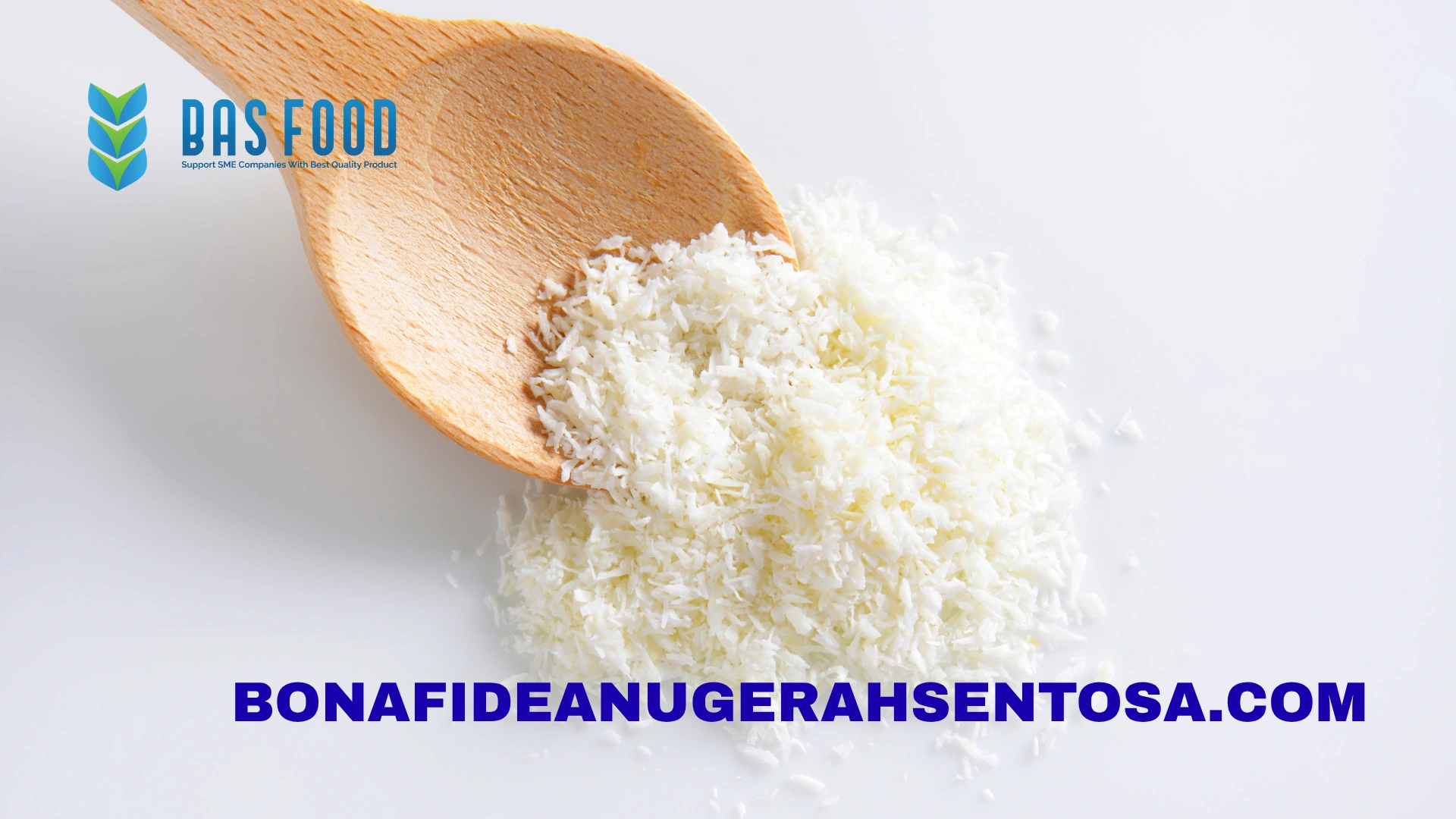
Understanding Desiccated Coconut Quality Control from the Source
Quality control begins long before the coconut reaches the processing facility. In fact, it starts at the farm level. Farmers must ensure that coconuts are harvested at the right maturity stage. This is important because overripe or underripe coconuts can affect taste, texture, and shelf life.
In addition, proper handling during collection and transportation is essential. Clean storage, quick delivery, and protection from contamination all contribute to strong desiccated coconut quality control. These early steps help maintain the natural integrity of the coconut before processing even begins.
What is HACCP and Why It Matters in Coconut Processing
HACCP stands for Hazard Analysis and Critical Control Points. It is a globally recognized system used to identify and prevent food safety risks. In desiccated coconut production, HACCP helps producers detect potential hazards such as microbial contamination, physical impurities, or chemical residues.
Moreover, HACCP is a proactive system. Instead of reacting to problems, it prevents them. Each stage of production is carefully monitored. From dehusking to drying and packaging, every step has specific control points. This approach ensures that food safety export standards are consistently met.
Critical Control Points in Desiccated Coconut Production
Every stage of production must follow strict procedures. First, coconuts are dehusked and deshelled. At this stage, cleanliness is crucial to avoid contamination. Workers must follow hygiene protocols, including wearing protective clothing and using sanitized equipment.
Next, the coconut meat is washed, sterilized, and shredded. During drying, temperature and time must be controlled carefully. If the temperature is too low, moisture remains high. If it is too high, the product may lose quality. Therefore, precise control ensures both safety and product consistency.
The Role of Halal Certification in Global Trade
Halal certification is essential for accessing Muslim-majority markets. However, its importance goes beyond religion. It also reflects cleanliness, ethical sourcing, and safe processing practices. As a result, Halal certified coconut products are trusted by a wide range of consumers worldwide.
To achieve Halal certification, producers must ensure that every stage of production follows Islamic dietary laws. This includes raw materials, processing methods, and packaging. Even cleaning agents must comply with Halal requirements. Therefore, Halal certification strengthens overall desiccated coconut quality control.
Integration of HACCP and Halal Systems in Modern Facilities
Modern coconut processing facilities often integrate HACCP and Halal systems. This creates a comprehensive safety framework. HACCP focuses on hazard prevention, while Halal ensures compliance with ethical and religious standards.
Together, these systems improve operational efficiency. They also reduce risks and increase buyer confidence. When combined, they create a strong foundation for meeting international food safety export standards. This integration is especially important for exporters targeting diverse global markets.
Importance of Non-GMO Desiccated Coconut in Today’s Market
Consumers today are more conscious about food sources. Many prefer natural and minimally processed products. Therefore, demand for non-GMO desiccated coconut continues to rise, especially in Europe and North America.
Producers must ensure that coconuts are grown without genetic modification. While coconuts are naturally non-GMO, certification still adds value. It assures buyers that the product meets strict international requirements. As a result, non-GMO status enhances product credibility and marketability.
Hygiene and Sanitation in Processing Facilities
Cleanliness is a key part of desiccated coconut quality control. Processing facilities must follow strict sanitation protocols. This includes regular cleaning of equipment, proper waste management, and pest control systems.
In addition, workers must follow personal hygiene rules. Handwashing, protective clothing, and health checks are standard practices. These measures reduce the risk of contamination and ensure that the final product is safe for consumption.
Packaging and Storage: Protecting Product Integrity
After processing, packaging plays a critical role. Desiccated coconut must be packed in food-grade materials that protect it from moisture, light, and air. Proper sealing helps maintain freshness and prevents contamination.
Storage conditions are equally important. Products must be stored in cool, dry environments. Temperature and humidity must be controlled to preserve quality. These steps ensure that the product meets global food safety export standards until it reaches the end user.
Traceability and Documentation for Export Compliance
Traceability is a key requirement in international trade. Buyers need to know where the product comes from and how it was processed. Therefore, exporters must maintain detailed records at every stage.
Documentation includes batch numbers, production dates, and certification records. This transparency strengthens trust between suppliers and buyers. It also ensures compliance with international regulations and supports effective desiccated coconut quality control.
Meeting International Market Requirements
Different markets have different standards. For example, the European Union has strict limits on contaminants and labeling requirements. The United States also enforces detailed food safety regulations.
To meet these requirements, exporters must stay updated with changing rules. Continuous training and system improvements are necessary. This commitment ensures that products consistently meet global food safety export standards.
The Competitive Advantage of Certified Coconut Products
Certifications provide a strong competitive advantage. They show that a company is committed to quality and safety. Buyers are more likely to choose suppliers who meet recognized standards such as HACCP and Halal.
In addition, certifications open access to more markets. They also allow exporters to command better pricing. Therefore, investing in certifications is not just about compliance. It is a strategic business decision.
Challenges in Maintaining High Safety Standards
Maintaining high standards is not always easy. Producers must invest in training, equipment, and regular audits. In addition, they must adapt to changing regulations and market demands.
However, these challenges are necessary for long-term success. Companies that prioritize safety build stronger reputations. They also gain the trust of international buyers, which is essential in the competitive global market.
Why Global Buyers Prioritize Safety and Compliance
Global buyers cannot afford risks. Food safety issues can lead to recalls, financial losses, and damage to brand reputation. Therefore, they prefer suppliers who follow strict desiccated coconut quality control systems.
Moreover, compliance with HACCP, Halal, and non-GMO standards ensures product consistency. It also simplifies import processes. As a result, certified suppliers are always in higher demand.
Conclusion: Building Trust Through Safety and Quality
Safety standards are the foundation of successful food exports. HACCP and Halal certifications ensure that desiccated coconut products meet global expectations. They also strengthen trust between suppliers and buyers.
As demand continues to grow, maintaining strong desiccated coconut quality control becomes even more important. By following strict standards and continuous improvement, exporters can secure long-term success in the global market.