
Coconut sugar may look simple, but its specifications matter when you buy it for commercial use. A buyer ordering moulded coconut sugar needs more than a product name. Block weight, dimensions, shape, moisture, color, packaging, food safety, and consistency can all affect production, storage, transport, and customer satisfaction. For this reason, understanding coconut sugar mould specifications is an important part of B2B sourcing. Whether you are a food manufacturer, distributor, retailer, ingredient importer, or food service business, clear specifications help you order the right product and reduce surprises when the shipment arrives.
Moulded coconut sugar is traditionally made by concentrating coconut sap and forming the cooked sugar into specific shapes. Today, producers can adapt the final product to different commercial requirements. As a result, buyers can discuss block size, weight, packaging, and other specifications with a suitable supplier before placing a large order.
This guide explains what buyers should look for when evaluating moulded coconut sugar. It also discusses how specifications influence handling and how to work with a coconut sugar mould supplier when developing a product for the B2B market.
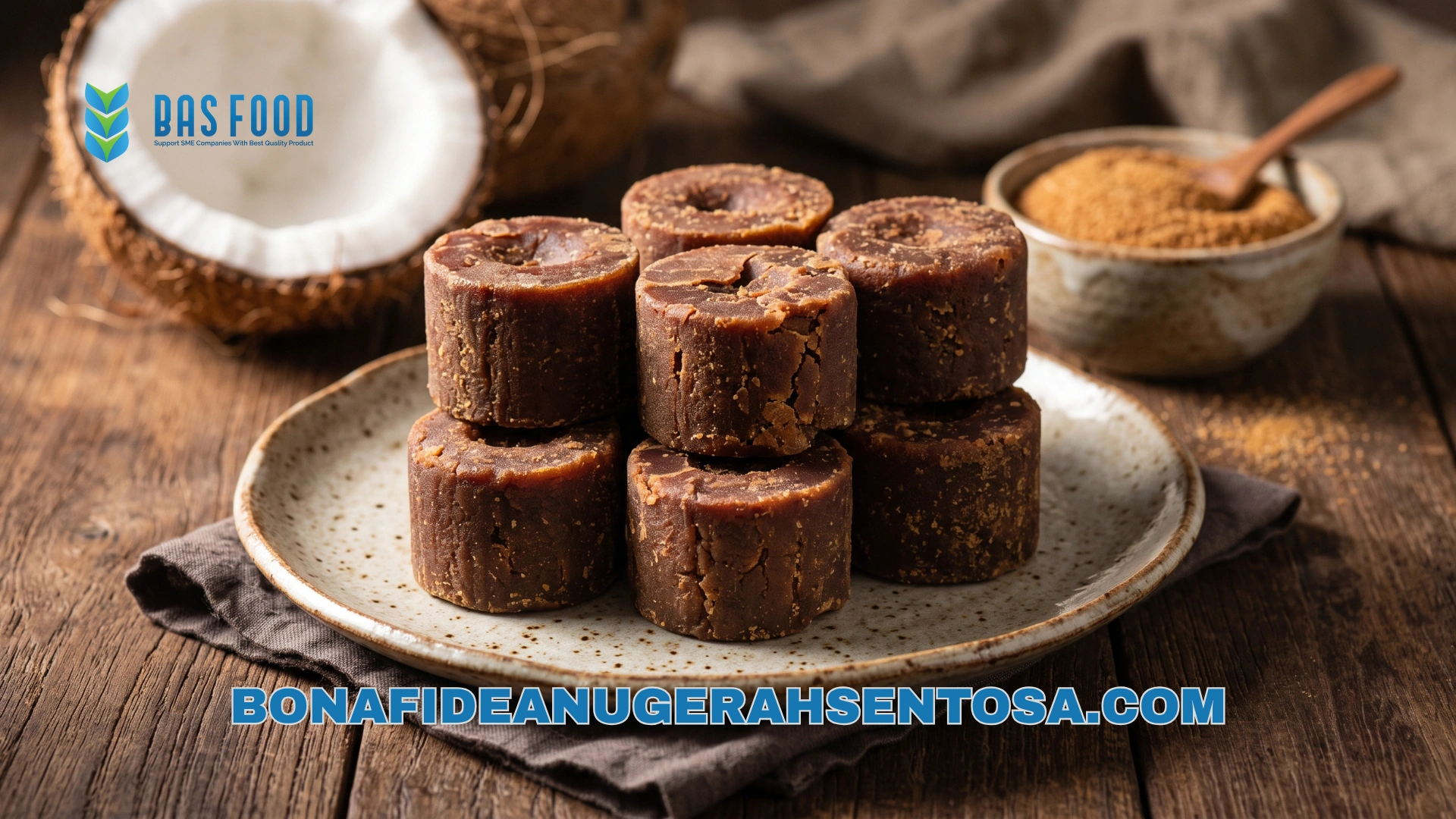
Why Coconut Sugar Mould Specifications Matter in B2B Purchasing
In retail, the appearance of a coconut sugar block may seem like a small detail. In commercial purchasing, however, physical specifications can have a much bigger impact. A food manufacturer may need a particular block weight because workers or machines use a fixed quantity in each production batch. Meanwhile, a distributor may prefer a compact shape because it is easier to pack, stack, and transport.
That is why buyers should define product specifications before discussing price alone. A product that has a lower purchase price may not be the most economical option if its weight varies too much, its packaging does not suit the buyer’s warehouse, or its dimensions make handling difficult. Consistency can ultimately save time and reduce waste.
Clear specifications also make communication between buyers and suppliers easier. Instead of simply requesting “coconut sugar blocks,” a buyer can explain the desired weight, dimensions, packaging format, and quality requirements. The supplier can then determine whether the existing production format meets those requirements or whether an adjustment is necessary.
For international trade, this becomes even more important. Buyers and sellers may work across different languages, measurement systems, and business practices. A detailed specification sheet creates a common reference point. It helps both sides understand exactly what product they are discussing before production begins.
Understanding Block Weight and Its Role in Commercial Use
One of the most important parts of coconut sugar mould specifications is block weight. Moulded coconut sugar can be produced in different sizes depending on the mould used and the customer’s requirements. The ideal weight depends largely on how the buyer plans to use the product.
For example, a food manufacturer may want smaller blocks that are easy to weigh and dissolve during processing. A traditional food business may prefer larger coconut sugar blocks because they fit its existing preparation method. A retail brand, on the other hand, may choose a specific weight that matches its consumer packaging.
Weight consistency is also important. If one block is significantly heavier than another, a production team may need to weigh each piece before use. That adds another step to the process. Therefore, buyers should discuss acceptable weight variation with the supplier rather than focusing only on the nominal weight.
It is also useful to distinguish between the target weight and the actual production tolerance. Natural products can have some variation, especially when producers work with traditional processing methods. A professional supplier should be able to explain its normal tolerance and quality control approach. Buyers can then decide whether the specification is suitable for their application.
Block Dimensions: More Than Just Appearance
The physical dimensions of a coconut sugar block can influence everything from packaging to warehouse storage. Length, width, and thickness determine how efficiently the product fits inside individual packs, cartons, sacks, or other shipping units. Therefore, dimensions should be included in a buyer’s specification sheet.
For instance, two blocks may have the same weight but different shapes. One may be wider and flatter, while another may be thicker and more compact. Although the amount of sugar may be similar, the two formats can behave differently during packing and storage. A buyer should therefore consider both weight and dimensions rather than using weight as the only physical specification.
Dimensions can also matter during food preparation. Smaller blocks may be easier to break down or dissolve. Larger blocks may be more suitable for traditional recipes where the sugar is measured manually. Consequently, the right mould depends on the intended use of the product.
When discussing specifications with a coconut sugar mould supplier, buyers should provide drawings, sample dimensions, or a clear description when a specific format is required. This reduces misunderstandings and gives the supplier a practical reference for production.
How Mould Design Influences Coconut Sugar Quality
A mould does more than create a visual shape. It also determines the physical format of the finished sugar. The mould needs to produce pieces that can be removed easily, maintain their shape, and remain reasonably consistent from batch to batch.
Good mould design can support efficient production because workers can fill, cool, remove, and pack the sugar in a repeatable way. However, the mould should also suit the characteristics of the cooked coconut sap. If the process conditions and mould design do not work well together, the finished blocks may have uneven surfaces, inconsistent shapes, or difficulty releasing from the mould.
This is why coconut sugar specifications should not be considered separately from the production process. A buyer requesting a new block size should understand that changing the dimensions can affect cooling time, handling, and packing. A supplier may need to test the requested format before confirming it for regular production.
For custom orders, sample approval can be especially useful. The buyer and supplier can agree on the shape, dimensions, approximate weight, surface appearance, and packaging before moving to larger production volumes. This approach gives both parties a practical reference for future shipments.
Food Grade Coconut Sugar: The Quality Requirements Behind the Product
Physical specifications are only one part of the purchasing decision. Buyers also need to consider whether the product meets their food safety and quality requirements. Food grade coconut sugar should be handled and processed according to appropriate food safety practices throughout production and packing.
Depending on the destination market and intended application, buyers may request documentation related to food safety systems, product testing, traceability, allergen information, microbiological parameters, or other requirements. The exact requirements can vary by country and customer, so buyers should communicate them clearly before placing an order.
Product appearance also deserves attention. Buyers commonly evaluate color, aroma, texture, cleanliness, and the overall condition of the blocks. Coconut sugar naturally has a characteristic caramel-like color and aroma, but the exact appearance can vary depending on the sap, processing conditions, and production method.
Importantly, buyers should define acceptable quality rather than relying on general descriptions such as “premium” or “high quality.” Specific criteria are easier to inspect and compare. A good specification may describe the expected color range, physical condition, packaging, and other measurable or observable characteristics.
Packaging Should Be Part of the Specification Sheet
A common purchasing mistake is to finalize the sugar specification while discussing packaging only at the end. In reality, packaging is closely connected to the product format. Moulded blocks need protection against moisture, contamination, physical damage, and other conditions that may affect product quality during storage and transportation.
The packaging format should therefore match the shipment size and supply chain. A buyer purchasing a few cartons for retail distribution may have very different requirements from an importer purchasing commercial quantities for food manufacturing. Both should communicate their preferred inner and outer packaging clearly.
For international shipments, export packaging also needs careful consideration. Cartons, liners, sealed bags, pallet arrangements, and container loading methods can influence product protection and logistics costs. The buyer and coconut sugar supplier should agree on these details before production whenever possible.
Clear package labeling is equally useful. Depending on the destination and customer requirements, labels may include product name, net weight, batch or lot identification, production information, storage instructions, and other required details. The final labeling should follow the applicable market and buyer requirements.
Choosing the Right Coconut Sugar Mould Supplier
Finding a coconut sugar mould supplier is not simply about locating a producer that can make a particular shape. B2B buyers should look at the supplier’s ability to maintain consistency, communicate clearly, manage production, and meet agreed specifications.
Start by asking practical questions. Can the supplier provide product specifications? Can they explain the production process? Can they provide samples? How do they control block weight and dimensions? What packaging options are available? Can they support repeat orders with the same specifications?
These questions help separate a supplier that simply sells a product from one that understands B2B procurement. A reliable supplier should be comfortable discussing technical details and should not hesitate to clarify requirements before accepting an order.
It is also useful to evaluate the supplier’s wider product range. A company that supplies moulded coconut sugar may also offer granulated products or related ingredients. For businesses that purchase multiple coconut-based sweetener formats, working with one experienced supplier may simplify procurement.
For example, CV Bonafide Anugerah Sentosa can be considered in the supplier evaluation process when buyers are looking for Indonesian coconut sugar products. However, buyers should always confirm current product specifications, availability, documentation, packaging, and commercial terms directly with the supplier before ordering.
Moulded Coconut Sugar vs. Granulated Coconut Sugar
Moulded sugar is not automatically better than granulated sugar. The right format depends on the application. Moulded blocks can be useful for traditional food preparation, food service, retail products, and applications where the product is handled as a solid piece.
Granulated sugar offers a different set of advantages. Coconut sugar granules are easier to weigh, blend, and distribute through many industrial processes. Food manufacturers may prefer granules when they need to combine coconut sugar with flour, cocoa, spices, beverage mixes, or other dry ingredients.
Therefore, B2B buyers should choose the physical format based on their production needs rather than simply following market trends. A bakery may need granules for consistent mixing, while a traditional food manufacturer may prefer blocks.
A supplier that can discuss both formats can be useful during procurement. A business may even purchase both moulded and granulated coconut sugar for different product lines. This can make the supplier relationship more flexible while keeping the quality requirements clear.
Building a Better B2B Buying Process
A strong purchasing process starts with a clear product brief. Define the desired coconut sugar format, application, block weight, dimensions, packaging, quality requirements, and expected volume. The clearer the brief, the easier it becomes for suppliers to respond accurately.
Next, request samples when appropriate. Samples allow buyers to examine the physical product before making a larger commitment. Check the weight, dimensions, color, aroma, texture, packaging, and overall condition against the agreed requirements.
After sample approval, document the specifications. Keep the approved sample reference, specification sheet, packaging details, and agreed tolerances together. This documentation can then become the reference for future purchase orders.
Finally, review each shipment against the agreed specification. B2B quality control does not have to be complicated. A simple incoming inspection can identify issues early and help maintain a consistent supply relationship.
Why Clear Specifications Create Long-Term Supplier Relationships
A successful B2B relationship depends on clear communication as much as product quality. When buyers provide detailed requirements, suppliers can plan production more accurately. When suppliers communicate their capabilities honestly, buyers can make better purchasing decisions.
This is particularly important for customized moulded products. A buyer may want a specific block weight, shape, or dimension for its packaging or production process. Rather than assuming that every request is immediately available, both parties should discuss whether the format is already part of the supplier’s production system or requires a new mould.
Over time, this process can make repeat orders easier. Once both sides agree on a specification, the same reference can be used for future production. That reduces unnecessary discussion and helps maintain consistency.
For businesses sourcing from Indonesia, choosing an experienced coconut sugar supplier can also support a more stable procurement process. The supplier should understand the needs of international buyers and be able to communicate product, packaging, and export requirements clearly.
The Smart Way Forward for Coconut Sugar Buyers
Coconut sugar mould specifications may seem like a technical subject, but they are actually a practical part of successful B2B sourcing. Weight, dimensions, mould design, quality, packaging, and food safety all influence how the product performs after it leaves the factory.
The best approach is to define your requirements before discussing a large order. Explain how you will use the coconut sugar, identify the physical format you need, and document the important specifications. Then ask your supplier to confirm what it can consistently produce.
For importers and food businesses, this approach creates a much stronger purchasing foundation. It makes supplier comparisons fairer, reduces misunderstandings, and supports consistent repeat orders. It also gives manufacturers more control over their production process.
Whether you need traditional moulded blocks or are comparing them with coconut sugar granules, the same principle applies: buy according to your application, not simply according to appearance or price. Work with a supplier that understands your requirements and can communicate its specifications clearly.
For buyers exploring Indonesian supply, CV Bonafide Anugerah Sentosa can be part of the supplier evaluation process. As with any B2B purchase, confirm current specifications, product availability, quality requirements, packaging, minimum order quantities, and export terms directly before placing an order.
Ultimately, good specifications turn a basic commodity purchase into a well-managed sourcing process. When the product, mould, packaging, and quality expectations are clearly defined, both buyer and supplier have a much better foundation for a reliable long-term partnership.